Mastering Swan Latte Art: A Comprehensive Guide
Latte art transforms a simple cup of coffee into a canvas for creativity, with the swan design standing as a testament to a barista's skill and precision. This guide delves into the intricacies of crafting the perfect swan latte art, from foundational techniques to advanced variations, ensuring you can elevate your coffee presentation to an art form.
Understanding Swan Latte Art
The swan design in latte art combines elements of the rosetta, tulip, and heart patterns, culminating in an elegant depiction of a swan gliding gracefully across your coffee's surface. This design not only showcases technical prowess but also enhances the aesthetic and sensory experience of the beverage.

Essential Tools and Ingredients
To embark on your swan latte art journey, ensure you have the following:
-
Espresso Machine: A reliable machine capable of producing consistent shots with rich crema.
-
Milk Frothing Pitcher: A stainless steel pitcher with a narrow spout for precise pouring.
-
Fresh Coffee Beans: High-quality beans, such as those offered by Bazan Coffee, to ensure robust flavor and excellent crema.
-
Thermometer: To monitor milk temperature during steaming.
Step-by-Step Guide to Creating Swan Latte Art
1. Pulling the Perfect Espresso Shot
-
Grind Fresh Beans: Use freshly ground coffee to maximize flavor and crema quality.
-
Dose and Tamp: Measure the appropriate amount of coffee (typically 18-20 grams for a double shot) and tamp evenly to ensure uniform extraction.
-
Extract the Shot: Aim for a 25-30 second extraction time to achieve a balanced espresso with a rich crema.

2. Steaming the Milk
-
Choose the Right Milk: Whole milk is preferred for its higher fat content, resulting in a creamier microfoam.
-
Fill the Pitcher: Pour cold milk into the pitcher, filling it up to the bottom of the spout dent.
-
Aerate the Milk: Submerge the steam wand just below the surface of the milk and turn on the steam. You should hear a paper-tearing sound, indicating proper aeration. Aerate for about 3 seconds.
-
Texture the Milk: After aeration, submerge the steam wand deeper to create a whirlpool motion, heating the milk evenly. Aim for a final temperature of 150°F (65°C).
-
Groom the Milk: Tap the pitcher on the counter and swirl gently to eliminate any large bubbles, resulting in a smooth, velvety microfoam.

3. Pouring the Swan Design
-
Start the Pour: Hold the cup at a slight angle and begin pouring the milk from a height of about 6 inches above the cup's surface. This helps the milk integrate with the espresso.
-
Create the Base Layer: As the cup fills halfway, lower the pitcher closer to the surface and pour a small dot of milk into the center to form the base of the swan.
-
Form the Wings: Move the pitcher slightly forward and pour another dot, slightly overlapping the first. Repeat this process to create additional layers, typically three to four, depending on your desired swan size.
-
Shape the Neck and Head: Once the layers are complete, gently lift the pitcher and draw a thin line through the center of the design to form the swan's neck. At the end of the neck, create a small dot to represent the head.

Advanced Techniques: Double Wing Swan Latte Art
For those looking to elevate their latte art skills, the double wing swan offers a more intricate design:
-
Second Wing Formation: After creating the first wing, move the pitcher to the opposite side and repeat the wing formation process. This creates the appearance of a swan with two elegant wings, adding depth and complexity to the design.
Mastering this technique requires consistent practice and a steady hand but results in a visually stunning presentation.
Tips for Perfecting Your Swan Latte Art
-
Consistent Practice: Regular practice is essential to refine your pouring technique and achieve symmetry in your designs.
-
Control the Pour: Maintaining a steady hand and consistent pour speed is crucial for creating clean layers.
-
Experiment with Milk Textures: Adjusting the milk's microfoam can impact the design's clarity and contrast.
-
Use Appropriate Tools: A milk pitcher with a narrow spout provides better control for intricate designs.

Frequently Asked Questions (FAQs)
Q: How can I practice latte art without wasting milk?
A: To minimize waste, you can practice with a mixture of water and a drop of dish soap, which simulates the texture of steamed milk. This allows you to hone your pouring technique without using actual milk.
Q: What is the ideal milk temperature for latte art?
A: The optimal milk temperature is between 150°F and 155°F (65°C - 68°C). This range ensures a smooth microfoam and enhances the milk's natural sweetness.
Q: Can I use non-dairy milk for latte art?
A: Yes, barista-formulated non-dairy milks, such as oat or almond milk, can be used. However, they may require adjustments in steaming technique due to differences in protein and fat content.
Q: How important is the espresso shot in latte art?
A: A well-extracted espresso shot with a rich crema is essential, as it provides the canvas for your latte art. Poor-quality espresso can hinder the clarity and contrast of the design.
Elevate Your Coffee Experience with Bazan Coffee
Mastering swan latte art enhances both the visual appeal and overall enjoyment of your coffee. By following the steps outlined in this guide and dedicating time to practice, you can elevate your barista skills and impress with stunning latte art creations.
At Bazan Coffee, we understand that while some people prefer caffeine-free options, others love the bold and energizing experience of high-quality coffee. That’s why we offer exceptional specialty coffee for those who enjoy a caffeine boost, particularly our Fine Robusta – Krong Nang, one of Vietnam’s finest high-altitude coffees.
Brew It with Too Strong: Vietnam’s Bold Robusta
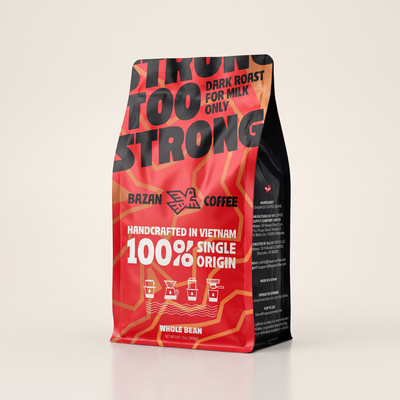
Too Strong is 100% Vietnamese Robusta from Đắk Lắk, dark roasted to stand up to milk and ice. It carries roughly twice the caffeine of a typical arabica blend (about 2.2–2.7%), with notes of chocolate, caramel and warm toast and none of the burnt, bitter bite.
- Made for milk: built for cà phê sữa đá, lattes and iced coffee.
- Brew it your way: phin filter, espresso machine, French press or paper filter.
- Fresh from the farm: roasted date printed on every bag.