Brewed to Bloom: The Ultimate Coffee Jelly Recipe – Elevated by Bazan Coffee
If you're looking to transform your coffee experience into something both nostalgic and refreshingly modern, coffee jelly is the dessert you didn’t know you needed. Silky, slightly bitter, and perfectly chilled, coffee jelly is a Japanese café classic that beautifully bridges the line between comfort and elegance. When brewed with Bazan’s specialty Vietnamese coffee, it becomes an artisan experience worth savoring.
In this guide, you’ll get:
-
The best coffee jelly recipe with a professional culinary twist
-
Flavor science behind why it works
-
Coffee pairing recommendations based on roast and jelly format
-
Practical tips and creative serving variations
-
Detailed FAQ and internal links to Bazan products
What Is Coffee Jelly?

Coffee jelly is a gelatin-based dessert made by combining brewed coffee with gelatin and sugar. It’s chilled until set, then served cubed in glasses with cream, condensed milk, or even layered in parfaits.
Originating in early 20th-century Japan, it gained popularity for being:
-
Elegant yet minimal
-
Caffeine-rich but dessert-friendly
-
Texturally playful, especially in iced drinks or milk-based sweets
Chilled coffee-based desserts retain more aroma in gel form due to stabilized volatiles, making this dish a perfect showcase for nuanced coffee profiles.
Coffee Jelly Recipe (Classic + Specialty Upgrade)
Base Ingredients:
-
2 cups strong brewed Bazan Coffee
-
2 tbsp sugar (adjust to taste)
-
2 tsp unflavored gelatin powder
-
2 tbsp cold water (for blooming gelatin)
-
Optional: a pinch of salt to enhance depth
Method:
-
Brew your coffee: Use a dark roast like Bazan’s Fine Robusta – Krong Năng or Special Vietnam Blend for strong body and bitterness.
-
In a small bowl, sprinkle gelatin over cold water and let it bloom for 5 minutes.
-
While gelatin blooms, heat your coffee in a saucepan with sugar (do not boil). Stir gently until sugar dissolves.
-
Remove from heat. Stir in bloomed gelatin until fully dissolved.
-
Pour mixture into a glass dish or mold. Refrigerate for 3–4 hours until set.
-
Cut into cubes or scoop for serving.
Using hot-brewed, not cold brew, for better gelatin integration. Gelatin struggles to dissolve evenly in chilled liquid and leads to uneven texture.
Serving Ideas to Elevate the Experience
Traditional Japanese Style:
-
Cubes served in a shallow bowl with sweetened condensed milk
-
Topped with whipped cream or vanilla ice cream for contrast
Vietnamese Twist:
-
Layered with che sweet beans, coconut cream, and crushed ice
-
Served alongside a shot of phin-brewed Arabica from Cau Dat for a light-bitter contrast
Café Modern:
-
Mix jelly cubes into iced lattes or coffee milkshakes
-
Add as topping for milk tea, affogato, or panna cotta
Why Coffee Jelly Works: Flavor and Texture Science

Gelatin traps volatile aroma compounds keeping coffee’s complexity intact longer than in liquid form.
According to flavor evaluation modules, coffee jelly offers:
-
Reduced bitterness, as chilling suppresses harsh acidity
-
Mellowed flavor curves, perfect for pairing with dairy
-
Extended aftertaste, due to trapped oils and aromatic suspension in gel
Gelatinous texture also enhances mouthfeel, a key dimension in cupping standards.
Best Bazan Roasts for Coffee Jelly
|
Roast |
Flavor Notes |
Jelly Pairing Use |
|
Bold, cocoa, earthy |
Best for espresso-like intensity |
|
|
Nutty, smooth, dark caramel |
Balanced and crowd-pleasing |
|
|
Floral, bright, clean |
Elegant pairing with lighter toppings |
Arabica jellies pair well with citrus zest and vanilla, while Robusta-based jellies are best served with cream, dark chocolate, or toasted coconut.
Pro Tips for Coffee Jelly Success
-
Sweetness fades when cold: Add 10–20% more sugar than you’d typically add to hot coffee.
-
Use full-bloom gelatin (240 bloom) for firm, clean cuts.
-
Avoid boiling coffee: Overheating destroys aromatics and introduces bitterness.
-
Chill quickly: Place jelly in shallow dishes for faster setting and better clarity.
FAQs: Coffee Jelly Explained
Can I make this vegan?
Yes replace gelatin with agar-agar powder. Use 1 tsp agar per 2 cups liquid. Boil agar in the coffee mixture, then pour and chill as usual.
How long does coffee jelly last?
Up to 5 days in the fridge, covered. Flavors mellow over time but texture holds.
Can I sweeten with condensed milk directly?
Yes add condensed milk into the coffee mixture before setting, or drizzle on top post-set.
Can I use decaf?
Absolutely. Use Bazan’s decaffeinated Arabica (when available) for a caffeine-free dessert with full flavor.
Final Thoughts: More Than a Dessert - A Brewed Artform
The coffee jelly recipe isn’t just a nostalgic dessert it’s a celebration of your favorite brew in a whole new form. With Bazan Coffee, you’re not just making jelly, you’re translating terroir, roast, and aroma into something you can spoon, layer, and serve.
This is the kind of dessert that creates memories especially when made with care and craft.
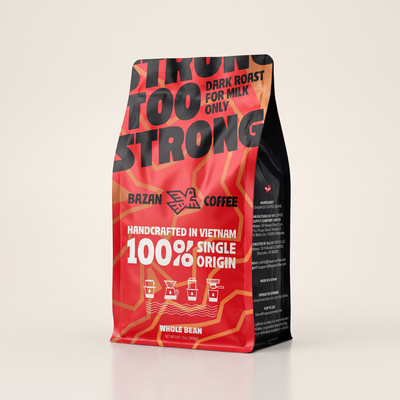
Brew It with Too Strong: Vietnam’s Bold Robusta
Too Strong is 100% Vietnamese Robusta from Đắk Lắk, dark roasted to stand up to milk and ice. It carries roughly twice the caffeine of a typical arabica blend (about 2.2–2.7%), with notes of chocolate, caramel and warm toast and none of the burnt, bitter bite.
- Made for milk: built for cà phê sữa đá, lattes and iced coffee.
- Brew it your way: phin filter, espresso machine, French press or paper filter.
- Fresh from the farm: roasted date printed on every bag.