French Press Coffee: The Ultimate Guide to Mastering Your Brew
In the dynamic world of specialty coffee, the French press remains a timeless brewing method celebrated for its ability to produce a full-bodied, aromatic cup. Whether you’re a seasoned home barista or a coffee enthusiast eager to explore new flavors, mastering French press coffee can transform your daily routine. In this comprehensive guide from Bazan Coffee, we’ll explore everything you need to know - from understanding what is a French press and how does a French press work, to detailed instructions on how to use a French press and perfecting your French press coffee ratio. This guide blends academic insight with practical tips and hands-on experience.
Why French Press Coffee Matters
For many, the French press is synonymous with artisanal, handcrafted coffee. Its simple design - yet highly effective extraction process - allows the natural oils and flavors of the coffee beans to shine through. Unlike methods that filter out essential oils, the French press produces a rich, robust brew that is both satisfying and complex.
At Bazan Coffee, we’re passionate about every aspect of coffee, from our meticulously sourced beans grown on our signature red soil to the art of brewing. The French press is not only a brewing method; it’s a ritual that connects you to the very essence of your coffee. Whether you’re curious about how to make French press coffee or looking for the ideal French press coffee ratio, this guide will equip you with the knowledge to brew an exceptional cup every time.
What is a French Press?
Defining the French Press
What is a French press? A French press is a manual coffee brewing device that uses immersion to extract flavors from coarsely ground coffee. It consists of a cylindrical glass or stainless steel container with a plunger and a metal or nylon mesh filter. The process involves steeping coffee grounds in hot water for a specified time before pressing the plunger down to separate the grounds from the liquid.

This method allows the coffee’s natural oils and sediment to remain in the brew, creating a full-bodied and flavorful cup. According to the Specialty Coffee Association, this immersion technique preserves the essential compounds that contribute to a coffee’s aroma and complexity .
How Does a French Press Work?
The Science Behind the Brew
How does a French press work? The mechanism is simple yet ingenious. Here’s a brief overview of the process:
-
Immersion: Coarse coffee grounds are immersed in hot water, allowing soluble compounds such as oils, acids, and sugars to dissolve.
-
Extraction: The steeping time - typically between 3 to 5 minutes - determines the extraction level. Longer steeping extracts more flavor but may lead to bitterness.
-
Separation: After the desired extraction time, the plunger is pressed down slowly. The mesh filter separates the coffee grounds from the brewed coffee, halting the extraction process.
This method relies on a careful balance of time, temperature, and grind size to produce the perfect cup. Research by CQI highlights that precise control over these variables is critical for achieving a balanced extraction that accentuates the coffee’s inherent characteristics .

How to Use a French Press: Step-by-Step Guide
Step 1: Gather Your Tools and Ingredients
Before you begin, ensure you have the following:
-
A French press (glass or stainless steel)
-
Fresh, coarsely ground coffee
-
Hot water (ideally at 93°C/200°F)
-
A timer
-
A stirring spoon
Step 2: Measure and Grind Your Coffee
How much coffee for French press?
A common guideline is to use a French press coffee ratio of 1:15 (coffee to water). For example, if you’re making a 32-ounce (about 950 mL) batch, you might use around 63 grams of coffee. Experiment with your preferred ratio until you achieve your ideal strength and flavor.
How much coffee to put in French press?
For a standard 8-cup French press, 30–35 grams of coffee is typically recommended.
Step 3: Preheat Your French Press
Fill your French press with hot water to preheat the container. This helps maintain the optimal brewing temperature during extraction. Discard the water after a minute.
Step 4: Add Coffee and Water
Place your measured coffee grounds into the preheated French press. Pour hot water over the grounds slowly, ensuring all coffee is saturated.
How to make French press coffee?
-
Start by pouring just enough water to cover the grounds, then stir gently to break up any clumps.
-
Continue pouring until you reach your desired water level, using the recommended ratio.
Step 5: Steep the Coffee
Set your timer and allow the coffee to steep.
How long to steep French press? and How long to let French press sit?
Generally, a steeping time of 3 to 5 minutes works best. If you prefer a bolder flavor, you might let it sit for up to 5 minutes, but be cautious as over-steeping can introduce bitterness.
Step 6: Press and Serve
After the steeping period, slowly press the plunger down. Apply steady, even pressure to separate the grounds from the liquid. Once fully pressed, immediately serve the coffee to prevent over-extraction.
Step 7: Enjoy and Experiment
Taste your brew and note the flavor profile. Adjust variables like the grind size, steeping time, or coffee-to-water ratio in subsequent brews to refine your process.

Tips and Tricks for the Perfect French Press Coffee
Choosing the Right Grind
For French press coffee, a coarse grind is essential. Fine grinds can slip through the mesh filter and result in a gritty cup. The coarse texture ensures a smooth, clean extraction that highlights the natural oils and nuanced flavors of your coffee beans.
Water Temperature Matters
Water that’s too hot can scorch the coffee, while water that’s too cool can lead to under-extraction. Aim for a temperature of about 93°C (200°F) to achieve a balanced extraction.
Experiment with Ratios
While the 1:15 ratio is a good starting point, don’t be afraid to experiment. Adjusting the French press coffee ratio can help you fine-tune the strength and flavor of your brew according to your taste preferences.
Stirring for Even Extraction
A gentle stir immediately after pouring the water helps ensure all coffee grounds are evenly saturated. This simple step can make a significant difference in the consistency of your extraction.
How to Use a French Press with Pre-Ground Coffee
If you’re using pre-ground coffee, choose a coarse grind specifically labeled for French press use. Freshly ground coffee is ideal, but if you must use pre-ground, make sure it’s not too fine to avoid a sludgy brew.
Advanced Insights: Research and Real-World Experiences
Scientific Perspectives on Extraction
Studies by the SCA indicate that controlled immersion, as seen in French press brewing, maximizes the extraction of flavorful compounds without excessive bitterness. The balance of soluble and insoluble compounds achieved through the French press method is key to its distinctive full-bodied taste .
Practical Tips from Barista Hustle
Barista Hustle experts advocate for the French press method as a versatile way to bring out the unique characteristics of different coffee beans. Their workshops emphasize that mastering how to use a French press is not just about following a recipe but understanding the science behind each step. This approach leads to better consistency and a richer sensory experience.
Real-World Experiences from Coffee Enthusiasts
Feedback from home baristas and professionals alike suggests that the French press is a forgiving method, allowing for creative experimentation. Whether you’re adjusting the steeping time or trying different coffee-to-water ratios, the process encourages exploration and personal adaptation. This hands-on approach, combined with a commitment to precision, is what sets great French press coffee apart.
Frequently Asked Questions (FAQ)
1. Why does my French press coffee sometimes taste bitter?
Bitter coffee can result from over-extraction, often caused by too fine a grind or steeping the coffee for too long. Ensure you use a coarse grind and stick to the recommended 3 to 5 minutes steeping time. Also, monitor your water temperature to avoid scalding the coffee.
2. How do I know if I’m using the correct French press coffee ratio?
The standard ratio of 1:15 (coffee to water) is a great starting point. However, your ideal ratio may vary based on personal taste and the coffee’s characteristics. Experiment with slightly more or less coffee and adjust until you achieve your desired flavor profile.
3. Can I use pre-ground coffee in a French press?
Yes, but it’s best to use coffee pre-ground specifically for French press brewing, which should be coarse. Using pre-ground coffee intended for other brewing methods (like drip coffee) can lead to over-extraction and a gritty texture.
4. How important is water temperature when brewing French press coffee?
Water temperature is critical. Too hot and you risk burning the coffee, too cool and the extraction will be incomplete. Aim for a water temperature of about 93°C (200°F) to ensure optimal extraction without compromising the coffee’s flavor.
5. How often should I clean my French press?
Regular cleaning is essential to maintain the quality of your brew. Rinse your French press immediately after use to remove coffee residues. A thorough cleaning with mild detergent should be done weekly to prevent oil buildup, which can affect future extractions.
6. What adjustments can I make if my coffee seems too weak or too strong?
If your coffee is too weak, try increasing the amount of coffee or reducing the water slightly. If it’s too strong, decrease the coffee dose or increase the water. Adjusting the steeping time can also help fine-tune the balance - shorter times for a lighter brew and longer times for a bolder cup.
Elevate Your Coffee Experience with Bazan Coffee
Mastering French press coffee is a journey of precision, experimentation, and passion. From understanding what is a French press and how does a French press work to refining your techniques for how to make French press coffee and determining the perfect French press coffee ratio, every detail contributes to a richer, more satisfying brew. Whether you’re learning how to use a French press with freshly ground or pre-ground coffee, or figuring out how long to steep French press and how long to let French press sit, the key lies in consistent practice and careful adjustment.
This guide provides you with the tools and knowledge to unlock the full potential of your French press.
At Bazan Coffee, we believe that the key to brewing the perfect French press coffee starts with selecting the finest coffee beans. Whether you’re experimenting with different grinds, refining your steeping time, or adjusting your water temperature, every detail plays a crucial role in making the ideal brew. With our premium, specialty-grade beans, you’re guaranteed a rich, bold, and complex cup that will elevate your French press experience to new heights.
Brew It with Too Strong: Vietnam’s Bold Robusta
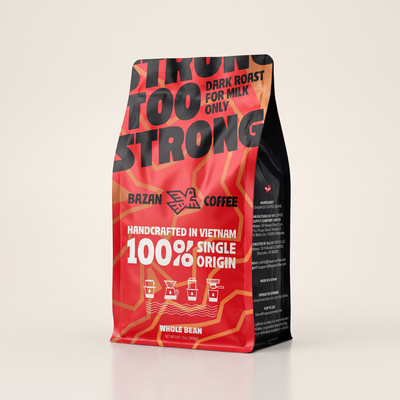
Too Strong is 100% Vietnamese Robusta from Đắk Lắk, dark roasted to stand up to milk and ice. It carries roughly twice the caffeine of a typical arabica blend (about 2.2–2.7%), with notes of chocolate, caramel and warm toast and none of the burnt, bitter bite.
- Made for milk: built for cà phê sữa đá, lattes and iced coffee.
- Brew it your way: phin filter, espresso machine, French press or paper filter.
- Fresh from the farm: roasted date printed on every bag.