How to Make a Coffee Latte with a Frother: A Complete Guide
A coffee latte is one of the most popular espresso-based drinks worldwide, known for its smooth, creamy texture and delicate balance between rich espresso and velvety milk. While professional baristas use espresso machines with steam wands to achieve the perfect milk froth, you can easily make a café-quality latte at home using a milk frother.
This guide will take you through everything you need to know about making a coffee latte with a frother, including:
-
The best coffee beans and milk for lattes.
-
A step-by-step method to make a latte at home.
-
Different types of milk frothers and how to use them.
-
Pro tips for achieving the perfect microfoam.
-
FAQs to help troubleshoot common problems.
Whether you’re a coffee enthusiast or just starting your home brewing journey, this guide will help you make the perfect latte every time.
What is a Coffee Latte?
A café latte (or simply latte) is an Italian-style coffee drink made with espresso, steamed milk, and a thin layer of milk foam. The word latte means milk in Italian, highlighting the drink's milk-forward profile.
A classic latte typically follows a 1:3 espresso-to-milk ratio, creating a drink that is smooth, creamy, and slightly sweet.

Key Features of a Latte:
-
Espresso-based: A strong espresso shot forms the foundation.
-
Steamed milk: Heated milk creates a silky, smooth texture.
-
Milk foam: A thin layer of foam enhances the mouthfeel.
-
Customizable: Lattes can be flavored with vanilla, caramel, mocha, or spices.
Unlike a cappuccino, which has a 1:1:1 ratio of espresso, milk, and foam, a latte contains more milk and a lighter foam layer, resulting in a milder coffee taste.
How to Make a Coffee Latte with a Frother: Step-by-Step Guide
Ingredients You Need
-
Freshly brewed espresso (or strong coffee)
-
Whole milk (or plant-based alternative)
-
Sugar or flavored syrup (optional)
Equipment You Need
-
Espresso machine, Moka pot, or AeroPress (for brewing coffee)
-
Milk frother (handheld, electric, or manual)
-
Milk pitcher or heat-resistant jar
Step 1: Brew Your Espresso
A good latte starts with a strong, well-extracted shot of espresso.
How to Brew Espresso:
-
Grind fresh coffee beans to a fine consistency.
-
Use an espresso machine, Moka pot, or AeroPress to brew a single (30ml) or double shot (60ml) of espresso.
-
Ensure proper extraction (25-30 seconds for espresso).

💡 Tip: Use a high-quality espresso bean like Bazan Coffee’s Fine Robusta – Krong Năng for a bold, caramelized coffee flavor.
Step 2: Heat the Milk
Lattes require steamed milk at around 150°F (65°C) to achieve the right texture.
How to Heat Milk Without a Steamer:
-
Stovetop Method: Heat milk in a saucepan over medium heat, stirring gently.
-
Microwave Method: Heat milk in a microwave-safe container for 30-40 seconds, checking the temperature.

💡 Tip: Avoid overheating the milk, as it can scald and affect the taste.
Step 3: Froth the Milk with a Frother
Milk frothers are essential for creating microfoam, the smooth, creamy texture that makes lattes so delicious.
How to Froth Milk with a Frother
Using a Handheld Milk Frother:
-
Submerge the frother just below the milk’s surface.
-
Turn it on and froth for 20-30 seconds until the milk doubles in volume.
-
Gently tap the milk pitcher on a flat surface to remove large air bubbles.
Using an Electric Milk Frother:
-
Pour milk into the frother and select the "hot froth" setting.
-
Let the machine create a smooth, consistent foam.
Using a French Press (Alternative Method):
-
Pour heated milk into a French press.
-
Pump the plunger up and down quickly for 30 seconds until foamy.

💡 Tip: Whole milk froths best, but oat milk and soy milk are great plant-based alternatives.
Step 4: Combine Espresso and Frothed Milk
-
Pour the espresso into a latte cup.
-
Slowly pour the frothed milk over the espresso in a circular motion.
-
Spoon a thin layer of foam on top for a classic latte look.

Step 5: Add Sweeteners or Flavors (Optional)
-
Vanilla syrup for a vanilla latte.
-
Caramel drizzle for a caramel latte.
-
Cinnamon or cocoa powder for extra aroma.
Types of Milk Frothers: Which One is Best?
1. Handheld Milk Frother
-
Affordable & portable
-
Creates decent foam but requires manual effort
2. Electric Milk Frother
-
Automated frothing & heating
-
Ideal for consistent, high-quality foam
3. Manual Frother (French Press)
-
Requires manual effort
-
Works well if you don’t have a dedicated frother
Frequently Asked Questions (FAQs)
Can I Make a Latte Without a Frother?
Yes! Use a whisk, French press, or mason jar to create foam manually.
What’s the Best Coffee for Lattes?
A medium to dark roast coffee with caramel, nutty, or chocolate notes works best.
Can I Make a Latte with Regular Coffee?
Yes, but it won’t have the same boldness as an espresso-based latte.
Elevate Your Coffee Experience with Bazan Coffee
At Bazan Coffee, we understand that while some people prefer caffeine-free options, others love the bold and energizing experience of high-quality coffee. That’s why we offer exceptional specialty coffee for those who enjoy a caffeine boost, particularly our Fine Robusta – Krong Nang, one of Vietnam’s finest high-altitude coffees.
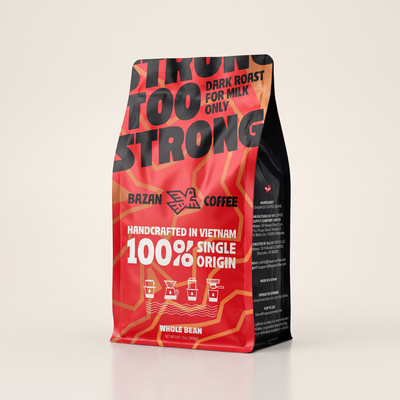
Brew It with Too Strong: Vietnam’s Bold Robusta
Too Strong is 100% Vietnamese Robusta from Đắk Lắk, dark roasted to stand up to milk and ice. It carries roughly twice the caffeine of a typical arabica blend (about 2.2–2.7%), with notes of chocolate, caramel and warm toast and none of the burnt, bitter bite.
- Made for milk: built for cà phê sữa đá, lattes and iced coffee.
- Brew it your way: phin filter, espresso machine, French press or paper filter.
- Fresh from the farm: roasted date printed on every bag.