The Ultimate Guide to Choosing the Best Pour Over Coffee Maker
The pour over coffee maker is one of the most beloved brewing methods for coffee enthusiasts who appreciate precision, control, and exceptional flavor. Unlike automatic coffee machines, pour over brewing allows you to extract delicate and complex flavors from high-quality coffee beans, making it a favorite among specialty coffee lovers.
If you're looking to enhance your coffee experience, this guide will help you understand how pour over coffee makers work, how to use them, and which type suits your needs best.
What Is a Pour Over Coffee Maker?
A pour over coffee maker is a manual brewing device that requires you to pour hot water over ground coffee, allowing it to pass through a filter and into a carafe or cup. This brewing method gives you complete control over the extraction process, resulting in a cleaner and more flavorful cup compared to traditional drip machines.
Many professional baristas and coffee experts prefer pour over coffee makers because they highlight the unique characteristics of high-quality coffee beans, ensuring that each sip delivers clarity, balance, and a smooth finish.

How Does a Pour Over Coffee Maker Work?
The pour over method is simple yet requires precision and attention to detail. The process includes:
-
Grinding Your Coffee Beans – A medium-coarse grind is recommended for even extraction.
-
Preparing the Filter – Rinse the paper filter with hot water to remove unwanted flavors.
-
Measuring Your Coffee – A common ratio is 1:15 (1 gram of coffee per 15 grams of water).
-
Blooming the Coffee – Pour a small amount of hot water (195–205°F) to allow CO2 release.
-
Slow, Circular Pouring – Gradually add water, allowing it to saturate the grounds evenly.
-
Allow the Coffee to Drip – The process typically takes 3–4 minutes.
-
Enjoy Your Coffee – Savor the rich aromas and balanced flavors.
The key to perfecting pour over coffee lies in adjusting your pouring speed, grind size, and brew ratio to match the coffee’s profile.

Types of Pour Over Coffee Makers
There are several types of pour over coffee makers, each offering a unique brewing experience.
1. Manual Pour Over Coffee Maker
A manual pour over coffee maker requires full control over water flow, pouring technique, and extraction time. Popular models include:
-
Hario V60 – Features a conical shape with spiral ridges, allowing for optimal water flow and enhanced clarity.
-
Chemex – A glass pour over coffee maker that produces clean, smooth coffee with a thicker paper filter.
-
Kalita Wave – Features a flat-bottom design, providing more even extraction.
Who Should Choose This?
-
Coffee purists who love manual control over the brewing process.
-
Those looking to experiment with different grind sizes and water temperatures.

2. Electric Pour Over Coffee Maker
An electric pour over coffee maker automates the process, ensuring consistent water temperature and flow rate. Popular models include:
-
Breville Precision Brewer – Offers variable flow control and precise temperature settings.
-
Technivorm Moccamaster – Features optimal brewing temperature (195–205°F) and pulse pouring for balanced extraction.

Who Should Choose This?
-
Those who want precision and convenience.
-
Coffee lovers who prefer automated control over brewing variables.
3. Automatic Pour Over Coffee Maker
An automatic pour over coffee maker mimics the art of manual brewing while eliminating the effort. Notable models include:
-
OXO Brew 9-Cup Coffee Maker – Offers consistent water distribution.
-
Ratio Six Coffee Maker – Simulates a barista-style pour over technique.
Who Should Choose This?
-
Those who enjoy high-quality coffee but don’t have time for manual brewing.
-
People who want precision without effort.
4. Glass Pour Over Coffee Maker
A glass pour over coffee maker is visually elegant and heat-resistant, ensuring pure flavor clarity. Examples include:
-
Chemex Classic Series – A timeless one-piece glass design.
-
Hario Woodneck – Features a reusable cloth filter.
Who Should Choose This?
-
Coffee enthusiasts who value aesthetic design and heat retention.
-
Those looking for clean, sediment-free coffee.

5. Metal Pour Over Coffee Maker
A metal pour over coffee maker uses a stainless steel mesh filter, allowing coffee oils and micro-fines to pass through, resulting in a fuller-bodied brew.
Who Should Choose This?
-
Those who prefer a richer, heavier coffee texture.
-
People looking for a reusable, eco-friendly option.

How to Use a Pour Over Coffee Maker
Using a pour over coffee maker requires precision and patience. Here’s a step-by-step guide:
-
Boil Water – Heat water to 195–205°F (90–96°C).
-
Grind Fresh Coffee Beans – Use a medium-coarse grind for even extraction.
-
Rinse the Filter – If using a paper filter, rinse it with hot water to remove residue and preheat the brewer.
-
Add Coffee Grounds – Use 20 grams of coffee for 300 grams of water as a general guideline.
-
Bloom the Coffee – Pour double the weight of the coffee in water (e.g., 40g of water for 20g of coffee) and wait 30–45 seconds.
-
Pour in Stages – Slowly pour the remaining water in circular motions, ensuring even saturation.
-
Wait for Full Extraction – The total brewing time should be around 3–4 minutes.
-
Enjoy Your Coffee – Pour into a cup and experience the pure flavors of specialty coffee.
Where to Buy a Pour Over Coffee Maker?
You can find pour over coffee makers at:
-
Online specialty coffee retailers like Amazon, Williams Sonoma, or Blue Bottle Coffee.
-
Local coffee shops that sell brewing equipment.
-
Specialty kitchen stores that carry brands like Hario, Chemex, and Kalita Wave.
Why Choose Bazan Coffee for Pour Over Brewing?
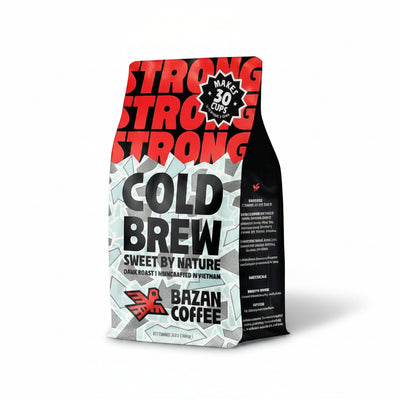
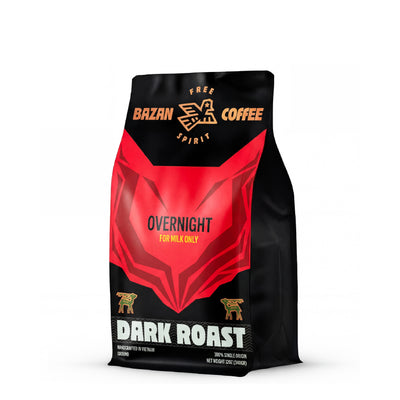
At Bazan Coffee, we understand that the best pour over coffee starts with high-quality beans. Our specialty Vietnamese Arabica and Fine Robusta beans are carefully sourced, expertly processed, and roasted to perfection.
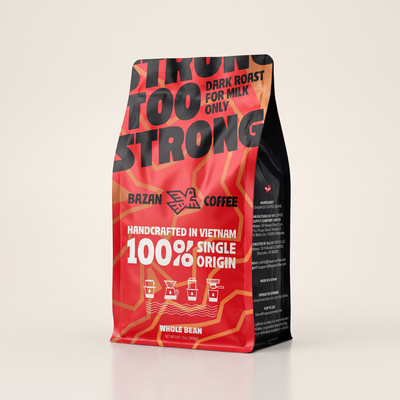
Brew It with Too Strong: Vietnam’s Bold Robusta
Too Strong is 100% Vietnamese Robusta from Đắk Lắk, dark roasted to stand up to milk and ice. It carries roughly twice the caffeine of a typical arabica blend (about 2.2–2.7%), with notes of chocolate, caramel and warm toast and none of the burnt, bitter bite.
- Made for milk: built for cà phê sữa đá, lattes and iced coffee.
- Brew it your way: phin filter, espresso machine, French press or paper filter.
- Fresh from the farm: roasted date printed on every bag.