Arabica vs. Robusta: The Epic Coffee Showdown – Which One Comes Out on Top?
Introduction: The Battle Between Arabica and Robusta
If you’re a coffee lover, you’ve likely come across the two most famous coffee species: Arabica (Coffea arabica) and Robusta (Coffea canephora). These two beans dominate the coffee industry, yet they are vastly different in taste, caffeine content, growing conditions, and price.
So, what is the real difference between Arabica and Robusta?
Is Arabica the luxurious, refined choice that coffee aficionados rave about? Or is Robusta the bold, caffeine-packed powerhouse that fuels your day?
In this ultimate coffee showdown, we’ll uncover:
-
The fundamental differences between Arabica and Robusta
-
Flavor profiles and which coffee is best for different brewing methods
-
The impact of caffeine and chemical composition on taste
-
The economic and market aspects of both coffee species
-
Arabica vs. Robusta: Which one is truly better?
By the end of this guide, you’ll have a deeper appreciation for both Arabica and Robusta, knowing exactly which one suits your personal taste and coffee lifestyle.
Origin and Cultivation: Where Do Arabica and Robusta Come From?
Arabica Coffee: The Delicate, High-Altitude Aristocrat
Arabica coffee has its roots in the Ethiopian highlands, where it was first cultivated over 1,000 years ago. Today, it dominates the specialty coffee industry, making up about 70% of global coffee production.
-
Grows best at high altitudes (1,200m – 2,200m)
-
Requires cooler temperatures (15-24°C)
-
Produces a softer, more nuanced flavor
-
More fragile, susceptible to pests and diseases

Because Arabica plants require precise climate conditions, their production is more labor-intensive and expensive - hence, the higher price tag.
Robusta Coffee: The Bold, Resilient Warrior
Robusta coffee hails from Central and Western Africa and thrives in hotter, lower-altitude environments (200m – 900m). Unlike Arabica, it’s much easier to grow and more resistant to disease, making it a budget-friendly option
-
Grows in warmer climates (18-30°C)
-
Highly resistant to pests and harsh conditions
-
Produces bolder, stronger flavors with a heavy body
-
Higher yield, making it more affordable
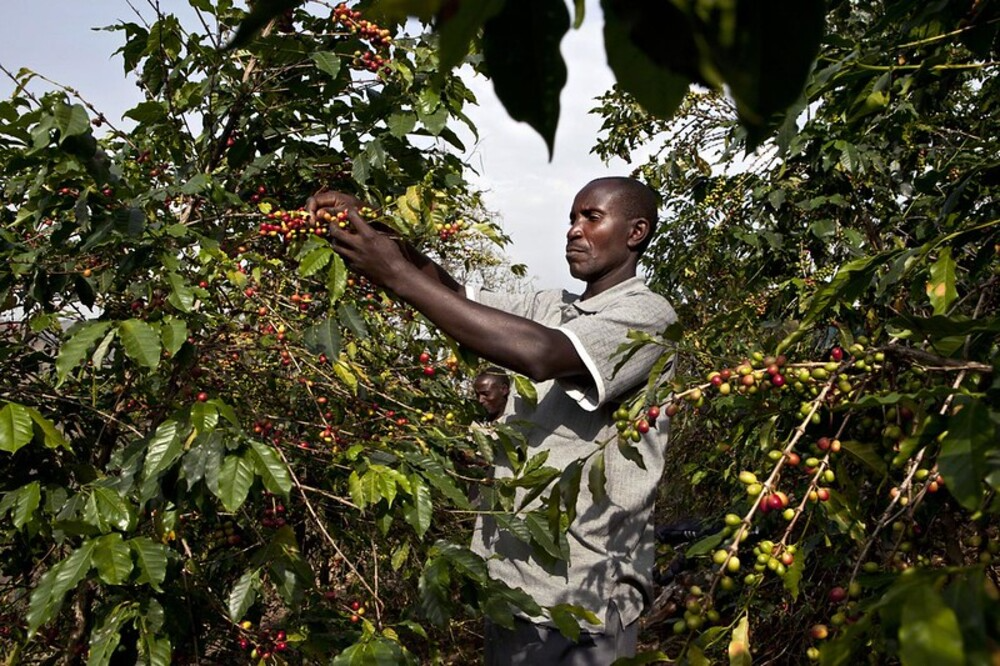
Because of its resilience, Robusta is a staple in instant coffee and espresso blends, giving them a rich crema and strong caffeine punch.
The Key Differences Between Arabica and Robusta
The fundamental difference between Arabica and Robusta lies in their flavor profile, caffeine content, growing conditions, and overall quality. Here’s a quick overview:
|
Feature |
Arabica |
Robusta |
|
Taste |
Sweet, fruity, complex |
Strong, bitter, earthy |
|
Caffeine |
Lower (1.2–1.5%) |
Higher (2.2–2.7%) |
|
Growing Altitude |
High altitudes (1200–2,200m) |
Lower altitudes (200–900m) |
|
Sugar Content |
Higher |
Lower |
|
Lipid Content |
Higher |
Lower |
|
Plant Resilience |
More delicate |
More resistant to pests and diseases |
|
Price |
More expensive |
More affordable |
|
Common Uses |
Specialty coffee, high-end espresso blends |
Instant coffee, commercial blends |
Arabica vs. Robusta: Which One Tastes Better?
Arabica: The Smooth and Complex Sensation
Arabica beans are prized for their sweet, floral, and fruity notes, with a smooth finish. The acidity is higher, which adds brightness to the cup.
-
Flavor Notes: Berry, caramel, chocolate, floral, citrus
-
Acidity: High (bright and crisp)
-
Mouthfeel: Silky and smooth
-
Best Brewing Methods: Pour-over, drip coffee, cold brew
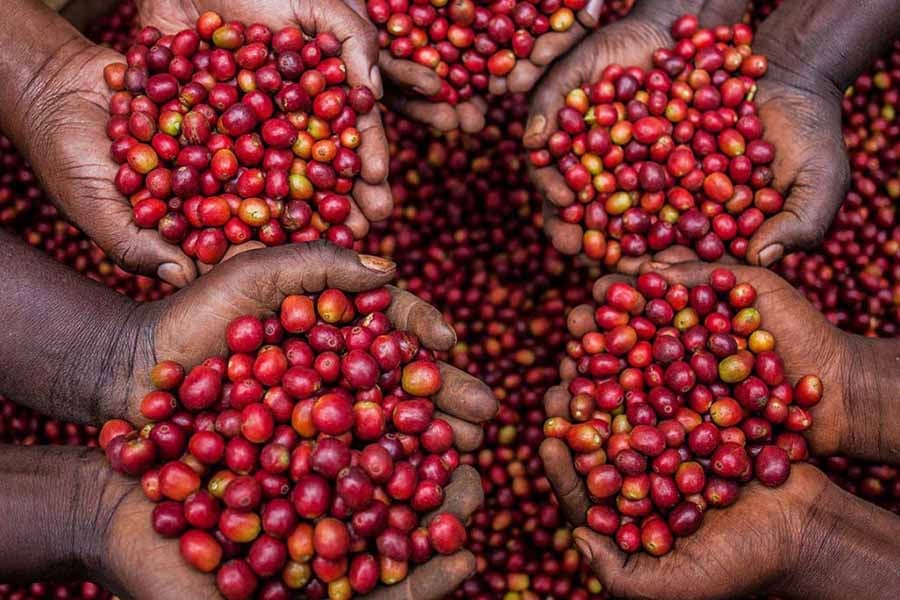
Arabica is the go-to choice for specialty coffee lovers, offering a refined, complex experience that evolves as the coffee cools.
Robusta: The Intense and Caffeine-Fueled Powerhouse
Robusta coffee is known for its bold, earthy, and bitter taste, with a thick, almost syrupy texture. It has lower acidity but a powerful caffeine kick.
-
Flavor Notes: Dark chocolate, nuts, wood, spice
-
Acidity: Low
-
Mouthfeel: Heavy and creamy
-
Best Brewing Methods: Espresso, French Press, Vietnamese Coffee
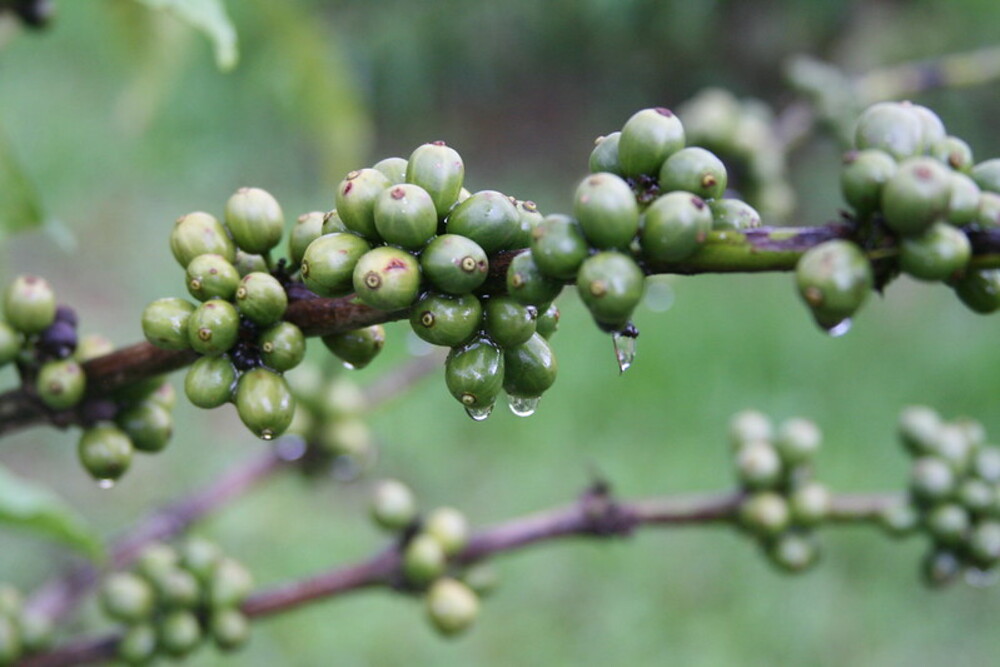
Robusta is the preferred choice for espresso blends, thanks to its thick crema and intense depth.
Caffeine and Chemical Composition: The Science Behind the Taste
Arabica: Less Caffeine, More Delicate Flavors
Arabica contains 1.2% - 1.5% caffeine, significantly lower than Robusta. However, it has more lipids and sugar, contributing to its smoother, sweeter taste.
-
Caffeine Content: ~1.5%
-
Higher sugar content → Naturally sweeter
-
More lipids → Smoother mouthfeel
Robusta: The Caffeine Beast
Robusta contains 2.2% - 2.7% caffeine, almost double that of Arabica. This high caffeine content not only delivers a stronger buzz but also makes Robusta more bitter.
-
Caffeine Content: ~2.7%
-
Lower sugar content → Bitter, earthy taste
-
Higher chlorogenic acid → More astringency
This explains why Robusta has a stronger and more bitter taste, while Arabica is more fragrant and complex.
Market Value and Global Demand: Why Arabica is More Expensive
Arabica coffee is generally more expensive than Robusta, due to its fragile nature, higher production costs, and superior taste profile.
Why Arabica Costs More
-
Difficult to grow (requires high altitude and specific climate conditions)
-
Lower yield and higher farming costs
-
High demand in the specialty coffee industry
Why Robusta is Cheaper
-
Hardy plant (can withstand heat, disease, and pests)
-
Higher yield per plant
-
Used in mass production (instant coffee, commercial espresso blends)
Even though Robusta is cheaper, some high-quality Robusta varieties are gaining recognition in premium espresso blends.
Arabica vs. Robusta: Which One is Better?
The answer depends on your taste preferences and coffee habits.
-
Love smooth, delicate, and complex flavors? → Arabica is for you.
-
Prefer strong, bold, and highly caffeinated coffee? → Robusta is the way to go.
-
Want a balance of smoothness and strength? → A blend of Arabica and Robusta can give you the best of both worlds!
Many espresso blends use 80% Arabica & 20% Robusta to achieve a perfect balance of flavor, body, and crema.
Elevate Your Coffee Experience with Bazan Coffee’s Finest Selections
Now that you know the difference between Arabica and Robusta, it’s time to experience true specialty coffee with Bazan Coffee. Whether you enjoy the refined complexity of Arabica or the bold intensity of Robusta, we have the perfect selection for you.
At Bazan Coffee, we take pride in sourcing premium, high-altitude Arabica and fine Robusta beans from Vietnam, delivering a coffee experience that is:
-
Rich in natural flavors, crafted through expert fermentation techniques
-
Grown on nutrient-rich Bazan volcanic soil, enhancing aroma and complexity
-
Hand-picked at peak ripeness to ensure optimal sweetness and depth
-
Processed using sustainable and innovative methods for a truly unique cup
Explore Our Two Signature Coffees:
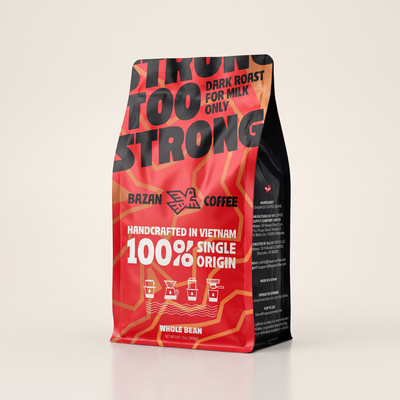
Brew It with Too Strong: Vietnam’s Bold Robusta
Too Strong is 100% Vietnamese Robusta from Đắk Lắk, dark roasted to stand up to milk and ice. It carries roughly twice the caffeine of a typical arabica blend (about 2.2–2.7%), with notes of chocolate, caramel and warm toast and none of the burnt, bitter bite.
- Made for milk: built for cà phê sữa đá, lattes and iced coffee.
- Brew it your way: phin filter, espresso machine, French press or paper filter.
- Fresh from the farm: roasted date printed on every bag.