The Ultimate Guide to Best Tasting Decaf Coffee: How to Brew, Choose, and Enjoy
For many coffee lovers, the idea of decaf coffee might seem less appealing compared to its caffeinated counterpart. However, advancements in decaffeination techniques and specialty coffee processing have transformed decaf coffee into a flavorful and satisfying experience. If you're searching for the best tasting decaf coffee, this guide will walk you through how to choose, brew, and enjoy decaf coffee without sacrificing taste.
We’ll explore what makes a decaf coffee taste great, common misconceptions, and how to get the most flavor out of your cup.
What is Decaf Coffee and How is It Made?
Decaffeinated coffee is made from regular coffee beans with most of the caffeine removed. The goal is to preserve as much flavor, aroma, and body as possible while reducing caffeine content.
How Do They Make Decaf Coffee?
The decaffeination process removes 97-99% of caffeine while keeping the coffee’s natural flavors intact. The most common methods include:
-
Swiss Water Process (SWP) – A chemical-free, environmentally friendly method that uses water and activated carbon filters to extract caffeine. This method retains the coffee’s natural sweetness and complexity.
-
CO2 Process – Uses carbon dioxide under high pressure to remove caffeine while preserving oils and flavors. Often used for high-end specialty decaf coffee.
-
Ethyl Acetate Process (EA) – A naturally occurring compound from fruits is used to remove caffeine. This method is sometimes called "sugarcane decaf" due to its mild, slightly sweet taste.
-
Methylene Chloride Process (MC) – A traditional solvent-based process, but less preferred due to concerns over chemical residues.
When choosing a decaf coffee, opting for Swiss Water Process or CO2 Process ensures the best taste and highest quality.

What Makes the Best Tasting Decaf Coffee?
1. High-Quality Coffee Beans
The best decaf coffee starts with premium-quality beans. Many cheap decaf options use low-grade coffee, leading to a flat and lifeless taste. Specialty coffee roasters now focus on sourcing high-altitude Arabica and Fine Robusta beans for decaf, ensuring better complexity, sweetness, and aroma.
2. The Decaffeination Process
-
Swiss Water Process Decaf retains the most original flavors.
-
CO2 Process Decaf maintains body and texture.
-
Ethyl Acetate Process Decaf provides a naturally sweet, smooth taste.
3. Roast Level Matters
-
Light Roast Decaf – Best for those who enjoy fruity and floral flavors.
-
Medium Roast Decaf – Balances acidity, sweetness, and body.
-
Dark Roast Decaf – Offers bold, rich, chocolatey flavors with lower acidity.
4. Freshness & Grinding
-
Always buy whole bean decaf coffee for the freshest taste.
-
Grind coffee just before brewing to retain its natural aroma.

How to Brew the Best Tasting Decaf Coffee
Even the best decaf beans can taste dull or lifeless if not brewed correctly. Follow these expert brewing techniques to unlock the full flavor potential of decaf coffee.
1. Best Brewing Methods for Decaf Coffee
-
French Press – Enhances full body and deep flavors.
-
Pour-Over (V60, Chemex) – Highlights delicate floral and fruity notes.
-
AeroPress – Creates a smooth, clean cup with good balance.
-
Espresso – Works well with dark roast decaf for bold, rich shots.
-
Cold Brew – A great choice for low-acid, naturally sweet decaf coffee.
2. Water Temperature & Ratios
-
Use filtered water at 195-205°F (90-96°C) for best extraction.
-
Ideal coffee-to-water ratio: 1:16 for a balanced cup or 1:15 for a stronger brew.
3. Grinding for Maximum Flavor
-
French Press → Coarse grind
-
Pour-Over & Drip Coffee → Medium grind
-
Espresso → Fine grind

Decaf Coffee FAQs
1. Does Decaf Coffee Still Have Caffeine?
Yes, but only in small amounts. A standard 8-ounce cup of decaf coffee contains about 2-5 mg of caffeine, compared to 80-120 mg in regular coffee.
2. Is Decaf Coffee Bad for You?
No. Decaf coffee retains antioxidants and nutrients found in regular coffee. Studies suggest it may reduce the risk of Type 2 diabetes and improve heart health.
3. Does Decaf Coffee Make You Poop?
Yes, but less than regular coffee. While caffeine is a known stimulant for digestion, other compounds in coffee, like chlorogenic acids, can still promote bowel movements.
4. How to Choose the Best Decaf Coffee Beans?
-
Look for whole bean decaf coffee instead of pre-ground.
-
Opt for organic decaf coffee beans to avoid chemical residues.
-
Choose a decaffeination method that preserves flavor and aroma.
Take Your Coffee Experience to the Next Level with Bazan Coffee
At Bazan Coffee, we specialize in high-quality, full-bodied specialty coffee. While we don’t offer decaf coffee, our carefully curated Fine Robusta and high-altitude Arabica blends provide a smooth, complex, and naturally sweet coffee experience.
If you enjoy a tropical fruit flavor or premium coffee with bold richness, try our Vietnamese specialty coffee instead.
Brew It with Too Strong: Vietnam’s Bold Robusta
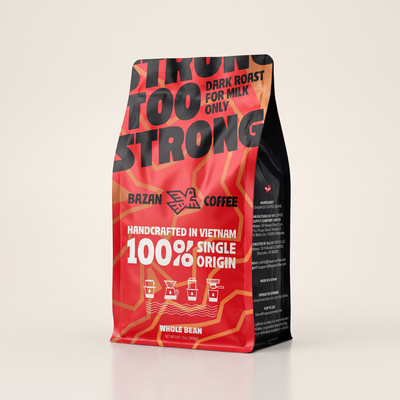
Too Strong is 100% Vietnamese Robusta from Đắk Lắk, dark roasted to stand up to milk and ice. It carries roughly twice the caffeine of a typical arabica blend (about 2.2–2.7%), with notes of chocolate, caramel and warm toast and none of the burnt, bitter bite.
- Made for milk: built for cà phê sữa đá, lattes and iced coffee.
- Brew it your way: phin filter, espresso machine, French press or paper filter.
- Fresh from the farm: roasted date printed on every bag.