Catimor Coffee Explained: Discover Its Origins, Flavor, and Best Brewing Methods
Introduction
Catimor coffee is one of the most intriguing coffee varieties, offering a unique combination of disease resistance, high yield, and distinct flavor. A hybrid of Timor Hybrid and Caturra, Catimor coffee is widely cultivated in Southeast Asia and Latin America. But what is Catimor coffee, and how does it compare to other coffee varieties?
In this guide, we will explore the Catimor coffee plant, its origins, characteristics, processing methods, and the best ways to brew it.
What is Catimor Coffee?
The Origin of Catimor Coffee
Catimor coffee is a hybrid variety developed in Portugal in 1959 by crossing Timor Hybrid and Caturra. The goal was to combine the disease resistance of Timor Hybrid (a natural Arabica-Robusta hybrid) with the compact size and high yield of Caturra.

Catimor is considered a high-yielding variety with strong resistance to coffee leaf rust (Hemileia vastatrix), making it particularly valuable for farmers in humid climates where fungal diseases are prevalent.
Characteristics of Catimor Coffee Beans
-
High Yield: Due to its compact growth, farmers can cultivate more plants per hectare, increasing productivity.
-
Disease Resistance: Resistant to coffee leaf rust and other common pests.
-
Early Maturity: Catimor coffee plants tend to mature faster than traditional Arabica varieties.
-
Flavor Profile: Depending on altitude and processing, Catimor coffee beans can have bright acidity, nutty undertones, and herbal complexity.
The Catimor Coffee Plant: Growth and Cultivation
Where is Catimor Coffee Grown?
Catimor coffee thrives in low to mid-altitude regions (600-1,500 meters above sea level). The variety is widely grown in:
-
Vietnam: A leading producer, especially in regions like Cau Dat and Lam Dong.
-
Indonesia: Found in Sumatra and Java, where it adapts well to volcanic soil.
-
Latin America: Countries like Colombia, Nicaragua, and Peru cultivate Catimor due to its high resistance to rust.

Challenges of Cultivating Catimor
While Catimor coffee plants are disease-resistant, they require careful management because:
-
At lower altitudes, Catimor can develop a harsh, bitter taste due to accelerated bean growth.
-
Farmers must balance shade and sun exposure to optimize flavor development.
Catimor Coffee Variety: Processing and Flavor Profile
How is Catimor Coffee Processed?
Like other Arabica varieties, Catimor coffee beans undergo different processing methods, each influencing the final cup profile:
1. Washed (Fully Washed) Processing
-
Produces a clean, bright, and balanced cup.
-
Enhances acidity, making it ideal for specialty coffee.

2. Natural Processing
-
Beans dry with the cherry intact, resulting in fruit-forward flavors.
-
Common in Vietnamese and Indonesian Catimor coffees.

3. Honey Processing
-
Retains some fruit mucilage, creating a syrupy body with moderate acidity.
-
Used in Central American Catimor varieties.

What Does Catimor Coffee Taste Like?
The flavor profile of Catimor coffee depends on factors such as altitude, soil, and processing method:
-
At lower altitudes (600-1,000m): The coffee tends to have a strong, earthy body with nutty notes.
-
At higher altitudes (1,200m+): Expect a brighter cup with citrus acidity and floral complexity.
According to SCA cupping reports, well-processed Catimor coffee can exhibit notes of:
-
Chocolate and hazelnut (when roasted medium-dark)
-
Citrus and stone fruit (when grown at higher elevations)
-
Herbal and tea-like flavors (when naturally processed)
How to Brew Catimor Coffee
Best Brewing Methods for Catimor Coffee Beans
Different brewing methods can highlight the unique qualities of Catimor coffee:
1. Pour-Over (For a Clean, Bright Cup)
-
Grind Size: Medium-fine
-
Water Temperature: 92-96°C (197-205°F)
-
Brew Time: 3-4 minutes
-
Flavor Notes: Balanced acidity, floral hints, crisp finish
2. French Press (For a Full-Bodied Experience)
-
Grind Size: Coarse
-
Water Temperature: 92-96°C (197-205°F)
-
Brew Time: 4 minutes
-
Flavor Notes: Heavy body, chocolatey richness
3. Espresso (For Intensity and Crema)
-
Grind Size: Fine
-
Pressure: 9 bars
-
Brew Time: 25-30 seconds
-
Flavor Notes: Bold, syrupy texture with nutty complexity
Using freshly roasted Catimor coffee beans ensures maximum flavor retention.
Take Your Catimor Coffee Experience to the Next Level with Bazan Coffee
At Bazan Coffee, we believe that exceptional coffee starts with exceptional beans—and Vietnamese Catimor is no exception. As a unique Arabica-Robusta hybrid, Catimor offers complex flavors, high disease resistance, and remarkable adaptability to Vietnam’s high-altitude farms.
While many coffee lovers associate Arabica with delicate floral notes and Robusta with bold intensity, Catimor bridges the gap, delivering bright acidity, caramel sweetness, and a balanced body. For those looking to experience specialty-grade Vietnamese coffee, Bazan Coffee offers the finest Catimor selections.
High-Altitude Catimor from Vietnam
Catimor has long been considered a high-yield hybrid, but in Vietnam’s ideal growing conditions, this varietal takes on an entirely new level of complexity. At 1,550m in Cau Dat, Da Lat, Catimor develops refined acidity, delicate floral notes, and caramelized sweetness, making it a standout choice for specialty coffee lovers.
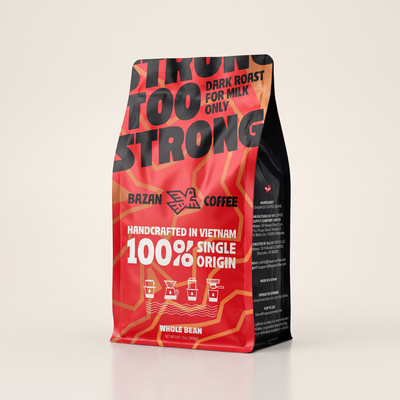
Brew It with Too Strong: Vietnam’s Bold Robusta
Too Strong is 100% Vietnamese Robusta from Đắk Lắk, dark roasted to stand up to milk and ice. It carries roughly twice the caffeine of a typical arabica blend (about 2.2–2.7%), with notes of chocolate, caramel and warm toast and none of the burnt, bitter bite.
- Made for milk: built for cà phê sữa đá, lattes and iced coffee.
- Brew it your way: phin filter, espresso machine, French press or paper filter.
- Fresh from the farm: roasted date printed on every bag.