Dead Eye Coffee: The Ultimate Guide to the Strongest Brew
In the realm of coffee, where flavor and caffeine converge, Dead Eye Coffee stands as a formidable contender. This potent concoction combines the smoothness of drip coffee with the intensity of three espresso shots, delivering an unparalleled caffeine kick. Whether you're pulling an all-nighter, embarking on a long drive, or simply need an extra boost, Dead Eye Coffee is the beverage of choice for those seeking maximum alertness.
This comprehensive guide delves into the origins, preparation methods, caffeine content, and flavor profile of Dead Eye Coffee, providing you with all the information needed to understand and enjoy this powerful brew.
What Is Dead Eye Coffee?
Dead Eye Coffee is a robust beverage that combines a standard cup of drip coffee with three shots of espresso. This trio of espresso shots elevates the caffeine content significantly, making it one of the strongest coffee drinks available. The name "Dead Eye" is believed to reference the intense caffeine jolt it provides, capable of reviving even the most fatigued individuals.
In some coffee shops, similar drinks may appear under different names.

Origins and Cultural Significance
The exact origins of Dead Eye Coffee are not well-documented, but it is widely recognized in American coffee culture. The drink gained popularity among individuals seeking a stronger caffeine kick, such as students, night-shift workers, and travelers. Its name and variations, like "Red Eye" (one espresso shot) and "Black Eye" (two espresso shots), reflect the escalating intensity of these beverages.
Dead Eye Coffee Recipe: How to Make It at Home
Ingredients:
-
8 ounces of freshly brewed drip coffee
-
3 shots (approximately 3 ounces) of espresso
Instructions:
-
Brew the Drip Coffee: Use your preferred method-drip machine, pour-over, or French press-to brew 8 ounces of coffee.
-
Prepare the Espresso Shots: Using an espresso machine or alternative methods like AeroPress or Moka pot, brew three shots of espresso.
-
Combine: Pour the espresso shots into the cup of drip coffee.
-
Stir and Serve: Mix gently to combine the flavors and enjoy immediately.
Note: For an iced version, allow the drip coffee to cool and serve over ice before adding the espresso shots.
Caffeine Content and Health Considerations
The caffeine content in Dead Eye Coffee can vary based on the strength of the drip coffee and espresso shots. On average:
-
Drip Coffee (8 oz): ~95 mg of caffeine
-
Espresso Shot (1 oz): ~63 mg of caffeine
Therefore, a Dead Eye Coffee typically contains approximately 284 mg of caffeine.
The recommended maximum daily caffeine intake for healthy adults is around 400 mg. A Dead Eye Coffee already makes up a significant portion of that amount, so individuals sensitive to caffeine should exercise caution.

Flavor Profile and Bean Selection
Flavor Profile:
Dead Eye Coffee offers a bold and intense flavor, combining the smoothness of drip coffee with the concentrated richness of espresso. The result is a full-bodied beverage with a pronounced coffee flavor and a slightly bitter edge.
Bean Selection Tips:
-
Drip Coffee: Opt for medium roast beans to maintain a balanced flavor.
-
Espresso: Choose dark roast beans to achieve a robust and intense espresso shot.
Using high-quality, freshly roasted beans enhances the overall taste and experience of the drink.
Variations and Customizations
-
Red Eye Coffee: A milder version with one espresso shot added to drip coffee.
-
Black Eye Coffee: A stronger variant with two espresso shots.
-
Lazy Eye Coffee: For those sensitive to caffeine, this version uses decaffeinated espresso shots.
Customizations can include adding milk, cream, or flavored syrups to suit personal preferences.

FAQs
Q: What is the difference between Red Eye, Black Eye, and Dead Eye Coffee?
A: The primary difference lies in the number of espresso shots added to the drip coffee:
-
Red Eye: 1 shot
-
Black Eye: 2 shots
-
Dead Eye: 3 shots
Each additional shot increases the caffeine content and intensity of the flavor.
Q: Can I make Dead Eye Coffee with decaffeinated espresso?
A: Yes, using decaffeinated espresso shots allows you to enjoy the flavor profile of Dead Eye Coffee without the high caffeine content.
Q: Is Dead Eye Coffee suitable for iced coffee?
A: Absolutely. To prepare an iced version, let the drip coffee cool, pour it over ice, and then add the espresso shots.
Conclusion
Dead Eye Coffee is best when you want the strongest version of this style of drink-more body, more intensity, and a heavier caffeine lift than either Red Eye or Black Eye.
A stronger coffee does not automatically mean a better one. In drinks like Dead Eye Coffee, the beans underneath still decide whether the cup feels bold and satisfying or simply harsh.
That is where Bazan Coffee comes in. If you want your Dead Eye Coffee to feel intense without losing structure, starting with the right beans makes all the difference. Explore Bazan Coffee’s specialty selections and choose the profile that fits how bold you want the cup to be.
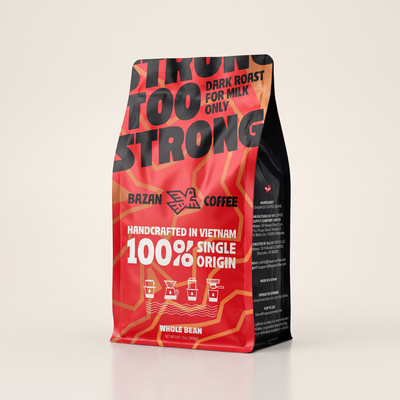
Brew It with Too Strong: Vietnam’s Bold Robusta
Too Strong is 100% Vietnamese Robusta from Đắk Lắk, dark roasted to stand up to milk and ice. It carries roughly twice the caffeine of a typical arabica blend (about 2.2–2.7%), with notes of chocolate, caramel and warm toast and none of the burnt, bitter bite.
- Made for milk: built for cà phê sữa đá, lattes and iced coffee.
- Brew it your way: phin filter, espresso machine, French press or paper filter.
- Fresh from the farm: roasted date printed on every bag.