Why Does Coffee Make Me Sleepy? A Scientific Look at the Caffeine Paradox
Coffee is universally known for its ability to wake us up, boost mental clarity, and keep us focused. So why is it that some people feel more tired after drinking it? If you’ve ever found yourself yawning post-latte, you’re not alone.
This in-depth guide explores the counterintuitive experience of feeling sleepy after consuming coffee.
Coffee as a Stimulant-So Why the Fatigue?
Caffeine is a central nervous system stimulant, commonly used to block the effects of adenosine-a chemical in the brain that promotes relaxation and sleepiness. Under normal conditions, this blockage keeps you alert. However, some people report feeling tired or drowsy after coffee. This phenomenon isn’t just psychological; it’s rooted in complex biological and environmental factors that we’ll unpack below.
The Science Behind Caffeine and Adenosine
Caffeine’s Mechanism of Action
Caffeine works by binding to adenosine receptors in the brain, effectively preventing adenosine-the "sleepiness" neurotransmitter-from making you feel drowsy. But this effect is temporary. Once the caffeine wears off, adenosine floods those now-open receptors, leading to a crash in alertness that can feel even more extreme than pre-caffeine fatigue.
Adenosine Accumulation and “Rebound” Tiredness
This is known as the adenosine rebound effect. Caffeine doesn’t halt adenosine production-it only masks its effects for a time. Once the caffeine metabolizes, the previously suppressed adenosine rushes in, causing increased fatigue.

Key Reasons Why Coffee Might Make You Sleepy
1. Caffeine Tolerance and Receptor Upregulation
If you drink coffee daily, your body can adapt by increasing the number of adenosine receptors-a process known as receptor upregulation. Over time, the same dose of caffeine becomes less effective, and paradoxically, you may feel more tired after drinking it. Research from the Coffee Quality Institute also notes that heavy caffeine users may experience diminished stimulatory effects over time.
2. Blood Sugar Spikes and Crashes
Sweetened coffee drinks or pairing coffee with refined carbs (like pastries) can cause rapid spikes in blood sugar. This initial energy rush is often followed by a crash that mimics caffeine fatigue. Bazan Coffee recommends monitoring not just your coffee intake, but what you consume with it.
3. Dehydration Effects
While caffeine is a mild diuretic, the water content in coffee often offsets its dehydrating effects. However, if you’re already mildly dehydrated or drink several cups without replenishing fluids, dehydration symptoms-like fatigue and brain fog-can arise. According to World Coffee Research, hydration is critical for maintaining caffeine's alertness-promoting benefits.
4. Poor Sleep Quality from Late Consumption
Even if coffee doesn’t keep you awake at night, caffeine’s half-life (about 5–6 hours) can still impair deep sleep stages. If consumed late in the day, coffee can reduce sleep quality, causing daytime tiredness that ironically leads to drinking more coffee-a cycle that’s hard to break.
5. Individual Genetics and Caffeine Metabolism
CYP1A2 is the gene responsible for how quickly your liver metabolizes caffeine. Some people process caffeine more slowly, which increases its side effects-including jitteriness, anxiety, and later, fatigue. Genetic variance can explain why coffee energizes one person and exhausts another.
Practical Solutions: How to Drink Coffee Without Feeling Sleepy
1. Time Your Intake Wisely
Avoid drinking coffee after 2 PM, especially if you’re caffeine-sensitive. Early-day consumption aligns better with your body’s natural cortisol rhythm and minimizes sleep disruption.
2. Hydrate Before and After
Drink a glass of water before and after coffee to counteract any diuretic effects. This helps sustain alertness and cognitive performance.
3. Limit Sugar and Cream
Skip sugary syrups and high-fat creamers that may spike and crash your blood sugar. Choose naturally sweet beans like Bazan Coffee’s Cau Dat Arabica, which offers notes of floral acidity and honeyed sweetness without additives.
4. Experiment with Different Roast Levels
Lighter roasts often contain slightly more caffeine than dark roasts and preserve more natural flavor complexity. If your current blend leaves you tired, experiment with different roast types or try single-origin coffees known for clean finishes and balanced caffeine release.
5. Try Alternatives for Better Focus
Matcha, yerba mate, or half-caf blends can offer smoother, longer-lasting energy for those who are caffeine-sensitive.

FAQs: Your Coffee and Fatigue Questions Answered
Q: Why does caffeine make me feel tired instead of awake?
Caffeine masks adenosine but doesn’t stop its production. Once caffeine wears off, accumulated adenosine binds to its receptors all at once, causing a crash.
Q: Is feeling sleepy after coffee a sign of caffeine addiction?
Not necessarily, but it can be a sign of high tolerance. Taking short caffeine breaks (every 2–4 weeks) can help reset sensitivity.
Q: Will switching to decaf help avoid sleepiness?
Possibly. Decaf contains small amounts of caffeine, enough for a mild alertness boost without the rebound crash. It may be a good option for those sensitive to the adenosine rebound effect.
Q: Can high-quality coffee reduce these side effects?
Yes. Specialty-grade beans from trusted sources like Bazan Coffee are more likely to deliver consistent flavor and more balanced caffeine effects, especially when brewed correctly.
Don’t Blame Coffee-Understand It
Feeling tired after drinking coffee isn’t a failure of the coffee-it’s a complex interaction of biology, dosage, timing, and personal habits. When approached with knowledge, coffee remains one of the most effective, flexible, and enjoyable natural stimulants available.
At Bazan Coffee, we believe in crafting coffee that not only tastes exceptional but also works in harmony with your lifestyle and biology. Explore our carefully curated beans-like our Special Vietnam Blend or Fine Robusta from Krông Năng-and discover how better beans can transform your daily routine.
Brew smarter, feel better-start with Bazan.
Browse our product collection now and elevate every cup.
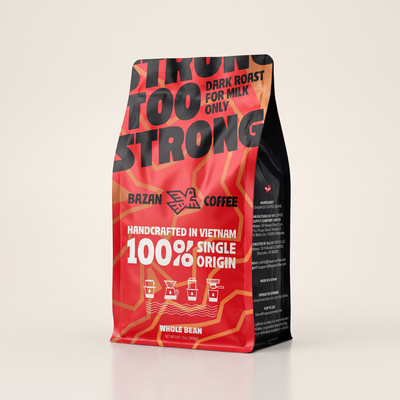
Brew It with Too Strong: Vietnam’s Bold Robusta
Too Strong is 100% Vietnamese Robusta from Đắk Lắk, dark roasted to stand up to milk and ice. It carries roughly twice the caffeine of a typical arabica blend (about 2.2–2.7%), with notes of chocolate, caramel and warm toast and none of the burnt, bitter bite.
- Made for milk: built for cà phê sữa đá, lattes and iced coffee.
- Brew it your way: phin filter, espresso machine, French press or paper filter.
- Fresh from the farm: roasted date printed on every bag.