Breve Coffee vs Latte: What’s the Real Difference? A Barista’s Guide to Flavor, Texture, and Craft
If you've ever stood at a coffee counter wondering whether to order a latte or something a little more indulgent-say, a breve coffee-you’re not alone. While both drinks start with espresso and steamed dairy, they couldn’t be more different in terms of taste, texture, nutrition, and even technique.
In this guide crafted by Bazan Coffee, we dive deep into breve coffee vs latte-breaking down not just the ingredients, but also the barista-level methods, dairy science, taste profiles, and expert insights that help you decide which suits your palate, mood, and lifestyle. Think of this as both an academic and hands-on coffee masterclass.
Understanding the Basics: What Is a Latte?
A latte (short for caffè latte) is a classic Italian espresso drink made with one-third espresso and two-thirds steamed milk, topped with a thin layer of microfoam. Its texture is velvety, mild, and slightly sweet due to the lactose in milk, but it remains a light-bodied beverage.
The modern latte has become a canvas for personalization-from syrups to alternative milks-making it the most ordered espresso drink in American coffee shops today.

What Is a Breve Coffee?
A breve coffee is an American adaptation of the Italian latte, but with a crucial difference: it uses half-and-half (a mix of equal parts whole milk and cream) instead of milk. The result? A drink with a much richer, heavier body, naturally sweeter flavor, and a dense, luxurious foam that feels like dessert in a cup.
The higher fat content in half-and-half affects not only mouthfeel but also the perceived sweetness and viscosity of the final drink. Fat molecules coat the tongue, suppressing bitterness and enhancing flavor longevity.
Breve Coffee vs Latte: Head-to-Head Comparison
|
Feature |
Latte |
Breve Coffee |
|
Base |
Espresso |
Espresso |
|
Milk |
Steamed whole milk (3.25% fat) |
Steamed half-and-half (10–12% fat) |
|
Texture |
Light, smooth |
Rich, velvety, indulgent |
|
Sweetness |
Mildly sweet |
Naturally sweeter |
|
Foam |
Microfoam, light |
Dense, creamy foam |
|
Calories (8 oz serving) |
~100–130 kcal |
~200–250 kcal |
|
Best Coffee Pairing |
Medium roast, balanced acidity |
Dark or medium-dark roast |
|
Experience |
Everyday, balanced |
Occasional, dessert-like |
The Science Behind the Difference: Milk vs Half-and-Half
The milk component in espresso drinks plays a critical role in:
-
Enhancing aroma compounds: Lactose and proteins in milk interact with espresso’s volatile compounds, amplifying perceived flavor.
-
Foam formation and stability: Protein concentration and fat percentages determine how dense or dry foam becomes.
-
Tactile sensation: More fat = more creaminess, weight, and flavor retention.
Steaming Techniques
Lattes: Steamed to ~60–65°C (140–150°F), incorporating moderate air to create microfoam.
Breve: Steamed to ~55–60°C (130–140°F), less air needed to avoid curdling or splitting due to high fat.
In practice, baristas must adjust their steaming techniques carefully.
Taste Test: How Breve Coffee and Latte Appeal to the Palate
Lattes are ideal if you prefer:
-
A light, clean texture
-
Balanced sweetness
-
A drink that highlights espresso without overwhelming it
Breve coffees are your go-to if you want:
-
A luscious, dessert-like cup
-
Creamy texture that lingers
-
A mellow espresso experience with enhanced richness
Think of it this way: If a latte is like sipping warm silk, breve is more like drinking espresso-flavored whipped cream.
When to Choose Each: Breve vs Latte in Everyday Life
Choose a Latte If:
-
You drink coffee daily and want a lighter, more balanced drink.
-
You're pairing your coffee with food (lattes are more neutral).
-
You’re watching calories or avoiding high-fat dairy.
Choose a Breve If:
-
You want a luxurious treat or dessert-like drink.
-
You need a rich beverage to cut through a darker espresso roast.
-
You enjoy naturally sweeter, fuller-bodied drinks without added sugar.

How to Make Both Drinks at Home: Complete Barista Method
Tools You’ll Need:
-
Espresso machine (or Moka pot + manual frother)
-
Milk steaming wand or electric frother
-
Thermometer
-
Milk pitcher
-
Digital scale
Latte Recipe:
-
Pull a double espresso shot (18–20g coffee to 36–40g yield).
-
Steam 5–6 oz of whole milk to 140–150°F.
-
Create a smooth microfoam (wet paint texture).
-
Pour the steamed milk over the espresso, finishing with latte art if desired.
Breve Coffee Recipe:
-
Pull a double espresso shot as above.
-
Steam 4 oz of half-and-half to 130–140°F.
-
Incorporate minimal air-avoid thick foam or overheating.
-
Pour gently over espresso, layering foam for visual appeal.
Pro Tip: Use Bazan Coffee’s medium-dark roast to bring out chocolate, nutty, or caramel notes that stand up to half-and-half's richness.
Frequently Asked Questions (FAQ)
1. Which is stronger in caffeine: breve or latte?
Both use the same base of espresso, so caffeine content is equal. However, lattes are typically larger in volume, sometimes diluting perceived strength. Breves feel stronger due to body and richness.
2. Is a breve healthier than a latte?
Not necessarily. A breve contains more fat and calories due to the half-and-half. However, if you're avoiding added sugars and only drink breve occasionally, it's a fair indulgence.
3. Can I make a non-dairy breve?
Traditional breve uses dairy. For alternatives, try oat creamer or cashew milk blends with high fat content. Note: texture may differ significantly.
4. Why do some baristas refuse to make breve drinks?
Some cafés avoid breve due to steaming complexity, calorie load, or supply limitations. But skilled baristas, like those at Bazan Coffee’s partner cafés, embrace it as an elevated specialty drink.
Conclusion: Which One Should You Choose?
At the end of the day, breve coffee vs latte comes down to personal preference-but also intention. If you’re after an everyday, flexible drink that pairs well with any mood, the latte is your faithful companion. If you’re craving a moment of indulgence, something to sip slowly and savor, breve coffee delivers like no other.
At Bazan Coffee, we roast beans that cater to both experiences. Whether you want to brew at home or elevate your café’s menu, our espresso selections are crafted for precision, balance, and versatility.
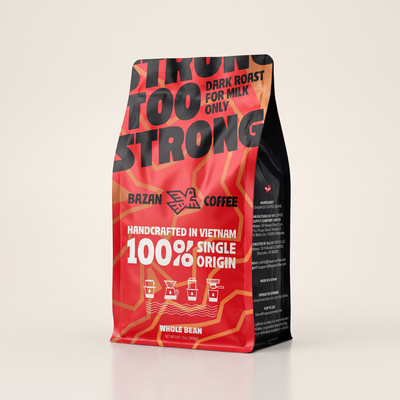
Brew It with Too Strong: Vietnam’s Bold Robusta
Too Strong is 100% Vietnamese Robusta from Đắk Lắk, dark roasted to stand up to milk and ice. It carries roughly twice the caffeine of a typical arabica blend (about 2.2–2.7%), with notes of chocolate, caramel and warm toast and none of the burnt, bitter bite.
- Made for milk: built for cà phê sữa đá, lattes and iced coffee.
- Brew it your way: phin filter, espresso machine, French press or paper filter.
- Fresh from the farm: roasted date printed on every bag.