Cappuccino vs. Latte: What Sets Them Apart & How to Brew Each Perfectly
If you've ever found yourself at a café debating between a cappuccino and a latte, you're not alone. These two classic espresso-based drinks share similarities but offer distinct flavor profiles, textures, and preparation methods. Understanding the key differences will help you choose the perfect coffee experience based on your preferences.
In this guide, we’ll explore:
-
Cappuccino vs Latte: What’s the Difference?
-
How to Make a Cappuccino & Latte at Home
-
Which One is Stronger and Healthier?
-
Frequently Asked Questions (FAQ)
Cappuccino vs Latte: What’s the Difference?
1. The Basics
Both cappuccino and latte start with a shot of espresso, but the difference lies in the milk ratio, texture, and presentation.
|
Feature |
Cappuccino |
Latte |
|
Espresso Ratio |
1/3 of the drink |
1/3 of the drink |
|
Milk Ratio |
1/3 steamed milk |
2/3 steamed milk |
|
Foam Ratio |
1/3 thick milk foam |
Light layer of milk foam |
|
Texture |
Thick, airy foam |
Creamy and smooth |
|
Serving Size |
150-180ml (5-6 oz) |
240-300ml (8-10 oz) |
|
Flavor Profile |
Strong espresso taste, light sweetness |
Milder, smoother with more milk sweetness |

2. Origin & Cultural Significance
-
Cappuccino originates from Italy, traditionally consumed in the morning.
-
Latte (Caffè Latte) is also from Italy but became more popular in North America for its smoother taste and larger serving.
How to Make a Cappuccino & Latte at Home
Cappuccino Recipe
Ingredients:
-
1 shot of espresso
-
60ml steamed milk
-
60ml milk foam
Steps:
-
Brew the espresso using a high-quality espresso machine.
-
Steam the milk until it reaches 60-65°C (140-150°F) and aerate to create thick foam.
-
Pour steamed milk over the espresso.
-
Spoon thick milk foam on top for a signature airy texture.
-
Optional: Dust with cocoa powder or cinnamon.

Latte Recipe
Ingredients:
-
1 shot of espresso
-
180ml steamed milk
-
Light milk foam
Steps:
-
Brew espresso and pour into a large cup.
-
Steam the milk to create a velvety texture.
-
Pour steamed milk slowly over espresso, creating a creamy blend.
-
Add a thin layer of foam on top.
-
Optional: Create latte art using a milk frother.

Which One is Stronger?
-
Cappuccino has a stronger coffee taste because it contains less milk and more air, keeping the espresso intensity.
-
Latte is milder and creamier, as the additional milk dilutes the espresso flavor.
Which One is Healthier?
|
Factor |
Cappuccino |
Latte |
|
Calories |
~80 (without sugar) |
~120 (without sugar) |
|
Caffeine |
~63mg (single shot) |
~63mg (single shot) |
|
Milk Content |
Less milk, more foam |
More milk, more calories |
If you're looking for a lower-calorie option, cappuccino is the better choice.
Frequently Asked Questions (FAQ)
Q: Which drink is better for latte art - latte or cappuccino?
A latte is better for latte art because it has more steamed milk and a smoother, creamier microfoam, making it easier to create detailed designs. The milk-to-foam ratio in a latte allows for better flow and contrast, essential for crafting intricate patterns like hearts, rosettas, and tulips.

A cappuccino, on the other hand, has a thicker layer of foam, which makes it harder to pour detailed art. The dense foam breaks more easily, making it less suitable for delicate designs. However, some skilled baristas can still create basic cappuccino art by adjusting their milk frothing technique.
Pro Tip: Use fresh, cold whole milk or high-quality oat milk for the best microfoam texture when making latte art.
Q: Can I make a latte or cappuccino without an espresso machine?
Yes! While an espresso machine produces the most authentic results, you can still make a latte or cappuccino at home using alternative brewing and frothing methods.
For Espresso:
-
Moka Pot – A stovetop espresso maker that brews strong, concentrated coffee similar to espresso.
-
AeroPress – Can produce a bold coffee shot with high pressure, mimicking espresso.
-
French Press – Not as strong as espresso, but you can brew a strong coffee concentrate by using more coffee grounds and less water.
For Milk Frothing:
-
Handheld Frother – A small electric whisk that quickly froths milk.
-
French Press – Fill with warm milk and pump the plunger up and down to create foam.
-
Whisking by Hand – Heat milk and vigorously whisk until it forms a frothy texture.
While these methods won't exactly replicate espresso or café-quality microfoam, they still create a delicious homemade version of lattes and cappuccinos.
Pro Tip: Heat your milk to 60–65°C (140–150°F) before frothing for the best texture and sweetness.
Q: Can I use plant-based milk for lattes and cappuccinos?
Absolutely! Non-dairy milk alternatives can be used in both lattes and cappuccinos, but the choice of milk affects the texture, frothing ability, and taste.
Best Plant-Based Milk for Lattes & Cappuccinos:
-
Oat Milk – The best alternative for lattes because it creates a smooth, creamy microfoam similar to dairy milk.
-
Almond Milk – Great for cappuccinos due to its light texture, but it doesn’t froth as well as oat milk.
-
Soy Milk – A good option for both drinks, though some brands may curdle when mixed with espresso.
-
Coconut Milk – Adds a tropical, nutty flavor but is less ideal for frothing.
Pro Tip: Use barista-grade plant-based milk, as it’s specially formulated to froth better and create silky microfoam.
Q: Which drink has more caffeine – a latte or a cappuccino?
A latte and a cappuccino have the same caffeine content when made with a single shot of espresso (~63mg of caffeine).
However, caffeine levels can increase if more espresso shots are added:
|
Drink Size |
Espresso Shots |
Caffeine Content |
|
Small (8 oz) |
1 shot |
~63mg |
|
Medium (12 oz) |
1 shot |
~63mg |
|
Large (16 oz) |
2 shots |
~126mg |
|
Extra Large (20 oz) |
3 shots |
~189mg |
Since both drinks use espresso, the caffeine difference depends on the number of shots. However, lattes contain more milk, making them taste milder, while cappuccinos have a stronger espresso flavor due to the lower milk content.
Pro Tip: If you need a stronger energy boost, ask for a double-shot latte or cappuccino!
Elevate Your Cappuccino & Latte with Bazan Coffee
At Bazan Coffee, we believe that a truly exceptional cappuccino or latte starts with high-quality coffee beans. While the art of frothing milk and achieving the perfect espresso-to-milk ratio is essential, the foundation of a great coffee experience lies in the beans you use.
Unlike mass-produced coffee, Bazan Coffee sources only the finest Vietnamese specialty coffee, ensuring rich crema, balanced acidity, and deep, caramelized sweetness - perfect for crafting lattes and cappuccinos that rival those from specialty cafés.
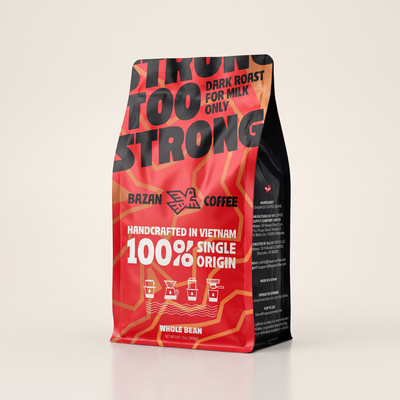
Brew It with Too Strong: Vietnam’s Bold Robusta
Too Strong is 100% Vietnamese Robusta from Đắk Lắk, dark roasted to stand up to milk and ice. It carries roughly twice the caffeine of a typical arabica blend (about 2.2–2.7%), with notes of chocolate, caramel and warm toast and none of the burnt, bitter bite.
- Made for milk: built for cà phê sữa đá, lattes and iced coffee.
- Brew it your way: phin filter, espresso machine, French press or paper filter.
- Fresh from the farm: roasted date printed on every bag.