Cold Brew Perfection: How to Make, Customize, and Enjoy Every Cup
Cold Brew Coffee has taken the coffee world by storm, celebrated for its smooth, less acidic taste and refreshing nature. But what makes it different from traditional iced coffee? Does it have more caffeine? How do you achieve the perfect cold brew ratio? In this guide, we will explore the intricacies of Cold Brew Coffee, its science, how to make Cold Brew Coffee, and why it's becoming a staple for coffee enthusiasts worldwide.
What is Cold Brew Coffee?
Cold Brew Coffee is a unique and refreshing way to enjoy coffee, distinct from traditional brewing methods that rely on hot water for extraction. Instead of heat, Cold Brew is made by steeping coarsely ground coffee beans in cold or room-temperature water for an extended period, typically between 12 to 24 hours. This slow extraction process results in a coffee concentrate that is naturally smooth, slightly sweet, and significantly less acidic than hot-brewed coffee.

Unlike hot brewing, which quickly extracts oils, acids, and bitter compounds, the cold water method gently pulls flavors from the coffee grounds, emphasizing its subtle notes without the sharpness or bitterness that can occur with heat. According to the Specialty Coffee Association (SCA), this reduced acidity and bitterness make Cold Brew an excellent choice for those with sensitive stomachs or those who prefer a less astringent coffee experience.
Due to its growing popularity, Cold Brew has inspired numerous innovations, including Nitro Cold Brew - a version infused with nitrogen gas, creating a smooth, velvety texture and a creamy mouthfeel without any dairy.
How to Make Cold Brew Coffee: The Perfect Cold Brew Recipe
Making Cold Brew at home is simple, requiring only high-quality coffee, water, time, and proper filtering. Follow these steps for a perfect batch every time:
1. Choosing Your Beans
The quality and origin of your coffee beans greatly influence the final flavor of your Cold Brew. Opting for premium beans, such as Bazan Coffee’s specialty Arabica from Cầu Đất or Fine Robusta from Krong Nang, ensures a complex and well-balanced taste.

-
Arabica: Offers floral, fruity, and sweet notes with a bright acidity, making it ideal for those who enjoy a delicate and nuanced brew.
-
Robusta: Known for its bold, earthy flavors and high caffeine content, it delivers a more intense and energizing Cold Brew.
2. Grinding the Coffee
A coarse grind is essential for optimal Cold Brew extraction. The grind size should resemble raw sugar or sea salt. A finer grind can lead to over-extraction, resulting in a bitter and sludgy brew, while an overly coarse grind may produce a weak and underwhelming flavor.

3. The Ideal Cold Brew Ratio
The ratio of coffee to water determines the strength of your brew. A general guideline is:
-
Stronger brew: 1:3 (one part coffee, three parts water)
-
Standard brew: 1:4 (one part coffee, four parts water)
-
Mild brew: 1:5 (one part coffee, five parts water)

This ratio can be adjusted based on personal preference. Cold Brew is typically brewed as a concentrate and diluted before serving.
4. Steeping Process
Once you have chosen your beans and ground them to the correct size, follow these steps to steep your Cold Brew:
-
Add coarsely ground coffee to a glass jar, French press, or Cold Brew maker.
-
Pour filtered cold water over the coffee grounds.
-
Stir gently to ensure all grounds are evenly saturated.
-
Cover and let the mixture steep for 12-24 hours. Steeping can be done at room temperature or in the refrigerator; the latter produces a crisper, cleaner taste.

5. Filtration
After steeping, strain the coffee through a fine mesh sieve, cheesecloth, or a dedicated Cold Brew filter to remove sediment. Ensure the filtration process is thorough, as leftover grounds can cause unwanted bitterness.

6. Serving Your Cold Brew
Since Cold Brew is a concentrate, it should be diluted before consumption. A common dilution ratio is 1:1 (one part Cold Brew, one part water or milk), but this can be adjusted based on personal preference.
-
For a classic Cold Brew: Mix with equal parts water and serve over ice.
-
For a creamy version: Add milk, oat milk, or almond milk for a smooth, rich texture.
-
For an indulgent twist: Sweeten with vanilla syrup, caramel, or honey.
-
For Nitro Cold Brew: Use a whipped cream dispenser infused with nitrogen to create a creamy, foamy texture.

Does Cold Brew Have More Caffeine?
One of the most common questions about Cold Brew is whether it contains more caffeine than regular coffee. The answer depends on several factors:
-
Coffee-to-water ratio: Cold Brew is often brewed at a higher concentration than regular coffee.
-
Brewing time: A longer steeping period allows for more caffeine extraction.
-
Type of beans: Robusta beans, like those from Bazan Coffee’s Krong Năng farm, naturally contain twice the caffeine of Arabica beans.
Cold Brew generally contains 30-50% more caffeine than regular iced coffee before dilution. However, once diluted, the caffeine content becomes comparable to standard drip coffee.
How Much Caffeine is in Cold Brew?
The caffeine content in Cold Brew can vary depending on the brewing method and dilution, but on average:
-
8-ounce cup of Cold Brew: 150-200 mg of caffeine
-
8-ounce cup of standard drip coffee: ~95 mg of caffeine
For those seeking an extra energy boost, Cold Brew made from Fine Robusta beans provides a significantly higher caffeine kick, making it an excellent choice for long workdays or intense workouts.
Cold Brew Coffee is a versatile and flavorful alternative to traditional hot coffee, offering a smooth, low-acid experience that can be enjoyed in various ways. Whether you prefer it black, with milk, or infused with nitrogen, mastering the Cold Brew process allows you to enjoy café-quality coffee from the comfort of your home.
Difference Between Cold Brew and Iced Coffee
Cold Brew Coffee and Iced Coffee are often confused, but they have distinct characteristics:
|
Feature |
Cold Brew Coffee |
Iced Coffee |
|
Brewing Method |
Steeped in cold water for 12-24 hours |
Brewed hot, then cooled |
|
Acidity |
Low |
Higher |
|
Flavor |
Smooth, naturally sweet |
More acidic and bitter |
|
Caffeine Content |
Higher (before dilution) |
Lower |
|
Serving Style |
Often served as a concentrate, diluted |
Brewed hot, then chilled |
Elevate Your Cold Brew Experience with Bazan Coffee
At Bazan Coffee, we believe that cold brew coffee is more than just a drink - it’s a craft. The secret to an exceptional cold brew lies in choosing the right coffee beans, as the slow extraction process highlights natural sweetness, smooth body, and nuanced flavors.
Unlike mass-produced coffee brands, Bazan Coffee is committed to quality sourcing, advanced fermentation, and precise roasting to enhance the best characteristics of each bean. Whether you enjoy a high-caffeine, bold cold brew, a smooth and delicate profile, or a balanced and versatile option, our Vietnamese Fine Robusta and high-altitude Arabica ensure a cold brew experience that stands out.
Brew It with Too Strong: Vietnam’s Bold Robusta
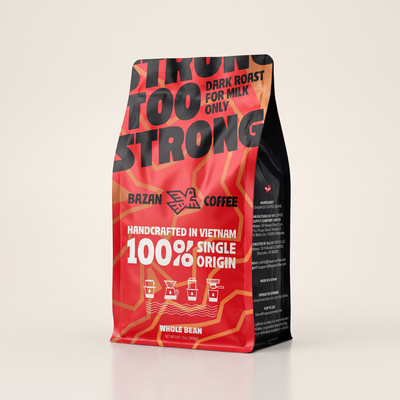
Too Strong is 100% Vietnamese Robusta from Đắk Lắk, dark roasted to stand up to milk and ice. It carries roughly twice the caffeine of a typical arabica blend (about 2.2–2.7%), with notes of chocolate, caramel and warm toast and none of the burnt, bitter bite.
- Made for milk: built for cà phê sữa đá, lattes and iced coffee.
- Brew it your way: phin filter, espresso machine, French press or paper filter.
- Fresh from the farm: roasted date printed on every bag.