The Only Guide You Need to Make the Perfect Espresso at Home
Master the art of espresso brewing with expert insights, practical techniques, and pro-level tips. Whether you're a home barista or an espresso aficionado, this guide will help you achieve the perfect shot.
Espresso is the foundation of many coffee drinks and represents the pinnacle of precision brewing. Unlike regular brewed coffee, espresso is extracted under high pressure, producing a concentrated, aromatic shot topped with a golden layer of crema. This guide will break down the difference between espresso and coffee, the right grind size, the best coffee beans for espresso, and step-by-step instructions to perfect your technique.
What is Espresso?
Espresso is a highly concentrated coffee beverage made by forcing hot water through finely ground coffee at 9 bars of pressure. This process extracts intense flavors, natural oils, and a signature crema that defines a well-pulled shot.

Difference Between Espresso and Coffee
-
Brewing Method: Espresso is brewed under pressure (9 bars) in 20-30 seconds, while coffee is usually brewed by gravity or immersion over several minutes.
-
Grind Size: Espresso requires a fine grind, while traditional coffee uses a medium to coarse grind.
-
Concentration: A single shot of espresso (30ml) contains more concentrated flavors and caffeine per ounce compared to regular coffee.
Single Origin Espresso: Why It Matters
Single origin espresso refers to coffee sourced from a specific region or farm, rather than being a blend of beans from multiple locations. This type of espresso allows coffee lovers to experience the unique terroir - the distinct flavors influenced by the soil, climate, and altitude of a specific region.
Benefits of Single Origin Espresso
-
Distinctive Flavor Profiles: Each region produces coffee with unique characteristics. Ethiopian beans may offer fruity and floral notes, while Vietnamese Arabica from Cầu Đất provides hints of spices, bell pepper, and caramel.
-
Traceability & Transparency: Knowing exactly where your coffee comes from ensures ethical sourcing and consistent quality.
-
Ideal for Specialty Coffee Enthusiasts: Single origin espresso highlights the purity of flavor, making it ideal for those who appreciate third-wave coffee.
Best Single Origin Beans for Espresso
-
Vietnamese Arabica – Cau Dat: Bright acidity, notes of bell pepper and caramel, perfect for clean and complex espresso shots.
-
Ethiopian Yirgacheffe: Fruity, floral, with a tea-like body, offering a vibrant espresso.
-
Brazilian Cerrado: Nutty, chocolatey, with low acidity, excellent for a smooth espresso.
-
Vietnamese Fine Robusta – Krong Năng: Bold, creamy, with notes of honey and caramel, delivering a powerful, crema-rich shot.
How to Brew Single Origin Espresso
To highlight the unique flavors of single origin coffee, adjust your espresso technique accordingly:
-
Grind Adjustment: Finer grind for high-acidity beans (e.g., Ethiopian), slightly coarser for fuller-bodied beans (e.g., Brazilian).
-
Brew Temperature: Lower temperature (195-200°F) for bright coffees, higher temperature (200-205°F) for chocolatey or nutty flavors.
-
Shot Timing: Aim for a 1:2 ratio (e.g., 18g coffee → 36g espresso) in 25-30 seconds.

How Much Caffeine is in a Shot of Espresso?
One standard shot of espresso (1 oz / 30ml) contains 63-75 mg of caffeine, whereas an 8 oz cup of brewed coffee typically has 95-120 mg of caffeine. Although espresso has less caffeine per serving, it is more concentrated.
Caffeine in Espresso vs Coffee
Espresso has a higher concentration of caffeine per ounce than regular coffee. However, due to the smaller serving size, a full cup of coffee generally contains more caffeine overall.
How to Grind Coffee Beans for Espresso
The grind size is crucial for espresso brewing. A fine, consistent grind ensures proper extraction and prevents under- or over-extraction.
Key Grind Factors:
-
Too fine → Over-extraction: Bitter and harsh taste.
-
Too coarse → Under-extraction: Sour and weak flavor.
Pro Tip: Invest in a burr grinder for precision grinding instead of a blade grinder, which produces uneven grounds.

What Coffee to Use for Espresso?
The best coffee for espresso depends on personal taste. However, high-quality single origin espresso or blends with well-balanced acidity and body work best.
Espresso Shot in Coffee-Based Drinks
Espresso is the base for many coffee drinks:
-
Americano: Espresso + Hot Water
-
Cappuccino: Espresso + Steamed Milk + Foam
-
Latte: Espresso + More Milk
-
Flat White: Espresso + Microfoam

How Much Coffee is in a Shot of Espresso?
-
Single Shot (1 oz) → 7-10g coffee.
-
Double Shot (2 oz) → 18-20g coffee.
-
Ristretto (shorter shot) → 15g coffee with less water.
Espresso Coffee Recipe Variations
-
Classic Espresso: Standard shot following the guide above.
-
Doppio: Double shot (60ml) for extra strength.
-
Lungo: Extended extraction for a milder taste.
-
Ristretto: Shorter extraction for a richer, more intense shot.
FAQs
1. Can I Make Espresso Without a Machine?
Yes! Use a Moka pot or Aeropress as an alternative, though they lack the pressure of a true espresso machine.
2. Why is My Espresso Too Bitter?
-
Over-extraction due to too fine a grind or long brew time.
-
Water temperature above 205°F.
3. Why is My Espresso Too Sour?
-
Under-extraction from too coarse a grind or short brew time.
-
Water temperature below 195°F.
Elevate Your Coffee Experience with Bazan Coffee
At Bazan Coffee, we understand that while some people prefer caffeine-free options, others love the bold and energizing experience of high-quality coffee. That’s why we offer exceptional specialty coffee for those who enjoy a caffeine boost, particularly our Fine Robusta – Krong Nang, one of Vietnam’s finest high-altitude coffees.
Brew It with Too Strong: Vietnam’s Bold Robusta
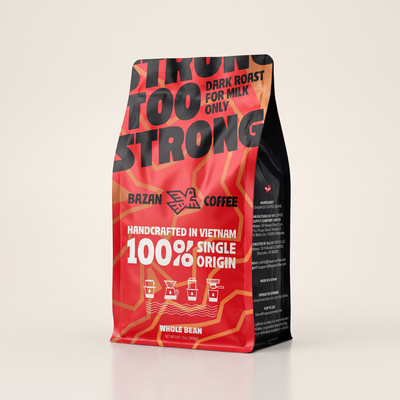
Too Strong is 100% Vietnamese Robusta from Đắk Lắk, dark roasted to stand up to milk and ice. It carries roughly twice the caffeine of a typical arabica blend (about 2.2–2.7%), with notes of chocolate, caramel and warm toast and none of the burnt, bitter bite.
- Made for milk: built for cà phê sữa đá, lattes and iced coffee.
- Brew it your way: phin filter, espresso machine, French press or paper filter.
- Fresh from the farm: roasted date printed on every bag.