Moka Pot Brewing Ratios: The Ultimate Guide for Perfect Coffee
Mastering the Moka pot coffee-to-water ratio is essential for achieving the perfect balance of strength, aroma, and flavor. Whether you’re looking for an espresso-like experience or a milder, smoother cup, understanding the right measurements can make a significant difference.
In this guide, you’ll learn:
-
How much coffee and water to use for a Moka pot
-
The science behind the perfect Moka brew
-
Step-by-step brewing instructions
-
Common mistakes and how to avoid them
-
FAQs to optimize your brewing experience
Understanding Moka Pot Brewing
The Moka pot, also known as a stovetop espresso maker, uses steam pressure to force water through finely-ground coffee, producing a rich and bold cup. While it doesn’t create the same crema as espresso, it delivers a strong, aromatic brew loved by coffee enthusiasts worldwide.
To get the best results, measuring the coffee-to-water ratio correctly is crucial.
How Much Coffee and Water for a Moka Pot?
The coffee-to-water ratio in a Moka pot depends on its size. A 1:10 ratio (1 gram of coffee for every 10 grams of water) is a solid starting point, but adjustments can be made depending on your taste preferences.
Standard Moka Pot Coffee-to-Water Ratios
|
Moka Pot Size |
Coffee (grams) |
Water (ml) |
|
1-Cup Moka Pot |
7g |
50ml |
|
3-Cup Moka Pot |
15g |
150ml |
|
6-Cup Moka Pot |
30g |
300ml |
|
9-Cup Moka Pot |
45g |
450ml |
Pro Tip: Never fill the water above the safety valve, as it can lead to over-extraction or potential damage to your Moka pot.

Step-by-Step Guide to Brewing Moka Pot Coffee
Ingredients:
-
Freshly roasted coffee beans
-
Filtered water
Equipment:
-
Moka pot (appropriate size)
-
Burr grinder
-
Kitchen scale
-
Heat source (stovetop)
Brewing Instructions:
-
Grind Your Coffee:
-
Use a medium-fine grind, slightly coarser than espresso but finer than drip coffee.
-
Avoid grinding too fine, as it can lead to clogging and over-extraction.
-
Measure Coffee and Water:
-
Use the recommended coffee-to-water ratio based on your Moka pot size.
-
Fill the bottom chamber with filtered water up to the safety valve.
-
Fill the Coffee Basket:
-
Add ground coffee to the filter basket.
-
Do not tamp - just level off the grounds with a finger.
-
Assemble the Moka Pot:
-
Ensure all components are clean and screw the top and bottom chambers together securely.
-
Heat the Moka Pot:
-
Place the Moka pot on a medium heat source.
-
Keep the lid open to monitor the brewing process.
-
Monitor the Brew:
-
As water heats, it will create pressure, pushing coffee into the upper chamber.
-
When you hear a hissing sound, remove the pot from heat immediately to avoid burning.
-
Serve and Enjoy:
-
Pour immediately into a cup and savor the rich, bold flavors.
Common Mistakes and How to Avoid Them
1. Using Too Much or Too Little Coffee
-
Mistake: Overloading the filter basket can lead to bitterness, while too little coffee results in a weak brew.
-
Solution: Stick to the recommended coffee-to-water ratio for your Moka pot size.

2. Grinding Coffee Too Fine or Too Coarse
-
Mistake: A too-fine grind can cause clogging, while a too-coarse grind leads to under-extraction.
-
Solution: Use a medium-fine grind for optimal extraction.

3. Brewing with Water That’s Too Hot
-
Mistake: Boiling water too quickly over-extracts the coffee, leading to bitterness.
-
Solution: Preheat your water slightly and use medium heat for a smooth extraction.

4. Leaving the Moka Pot on Heat for Too Long
-
Mistake: Allowing the coffee to continue bubbling can burn the brew.
-
Solution: Remove the Moka pot from heat as soon as the upper chamber fills.

Frequently Asked Questions (FAQ)
Q: Can I use espresso coffee in a Moka pot?
A: Yes, but ensure a slightly coarser grind than traditional espresso to avoid clogging.
Q: How do I clean my Moka pot?
A: Rinse all parts with warm water and avoid using soap, as it can alter the flavor.
Q: Why does my Moka pot coffee taste bitter?
A: Over-extraction, excessive heat, or a too-fine grind can lead to bitterness. Try adjusting your variables.
Q: How does Moka coffee compare to espresso?
A: While similar, Moka coffee is less concentrated than espresso, with a slightly more intense bitterness due to lower pressure (1-2 bars vs. 9 bars in an espresso machine).
Q: Can I make milk-based drinks with Moka coffee?
A: Absolutely! Moka coffee is a great base for lattes, cappuccinos, and mochas.
Master the Art of Moka Pot Brewing with Bazan Coffee
At Bazan Coffee, we believe that brewing with a Moka pot is an art, and the key to achieving the perfect cup lies in choosing the right coffee beans. Moka pot brewing requires bold, flavorful coffee with the right grind size to extract a rich, balanced espresso-like coffee.
Unlike mass-produced coffee brands, Bazan Coffee is committed to high-quality sourcing and precise roasting to bring out the best characteristics of each bean. Whether you enjoy a strong, intense brew, a balanced and aromatic profile, or a refined, smooth cup, our Vietnamese Fine Robusta and high-altitude Arabica ensure that your Moka pot coffee is second to none.
Brew It with Too Strong: Vietnam’s Bold Robusta
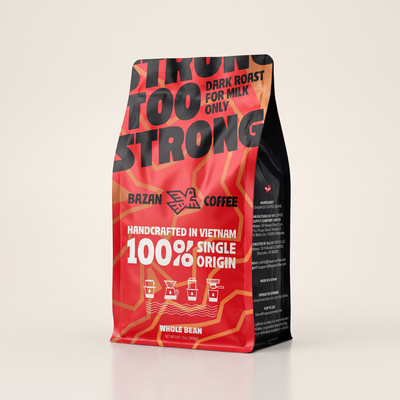
Too Strong is 100% Vietnamese Robusta from Đắk Lắk, dark roasted to stand up to milk and ice. It carries roughly twice the caffeine of a typical arabica blend (about 2.2–2.7%), with notes of chocolate, caramel and warm toast and none of the burnt, bitter bite.
- Made for milk: built for cà phê sữa đá, lattes and iced coffee.
- Brew it your way: phin filter, espresso machine, French press or paper filter.
- Fresh from the farm: roasted date printed on every bag.